
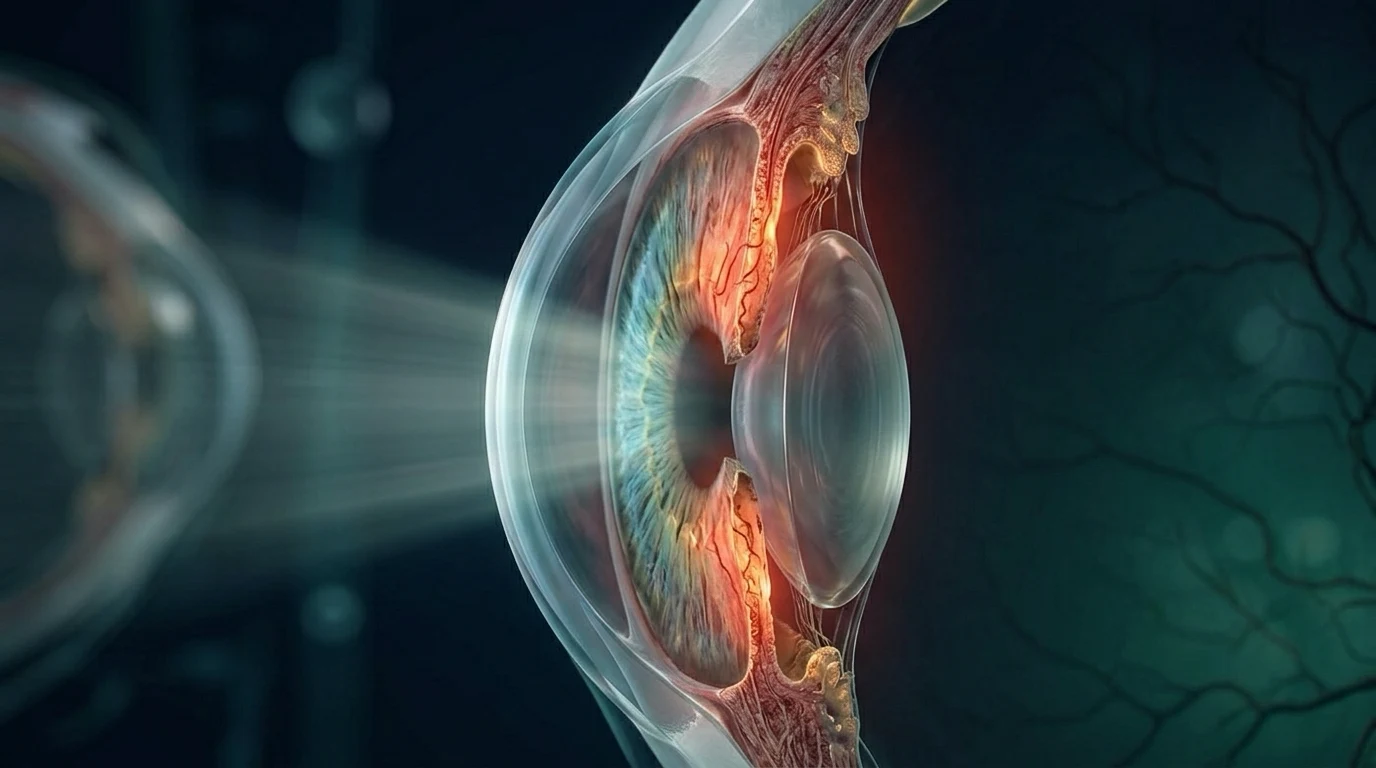
التهاب العنبية هو التهاب في داخل العين وقد يسبب احمرارًا أو ألمًا أو حساسية للضوء أو زغللة. ولأنه قد يؤثر في القزحية أو الجسم الزجاجي أو الشبكية، فالعين الحمراء المؤلمة مع ضعف النظر ليست بالضرورة حساسية أو التهاب ملتحمة بسيطًا. تحتاج الحالة إلى كشف سريع لمعرفة السبب وتحديد العلاج.
أين يحدث الالتهاب؟
العنبية تشمل القزحية والجسم الهدبي والمشيمية. التهاب الجزء الأمامي غالبًا يظهر باحمرار وألم وحساسية للضوء، بينما التهاب الجزء الأوسط أو الخلفي قد يظهر أساسًا كعوامات وزغللة دون احمرار واضح.
قد يزداد الألم مع الضوء لأن القزحية الملتهبة تتحرك مع تغيّر الإضاءة. الأعراض وحدها لا توضح مكان الالتهاب أو شدته، لذلك لا تؤجل الكشف لمجرد أن الاحمرار يبدو بسيطًا.
الأسباب المحتملة
قد يرتبط التهاب العنبية بمرض مناعي مثل التهاب المفاصل أو أمراض الأمعاء، أو بعدوى، أو بإصابة، أو بأدوية، وأحيانًا لا يظهر سبب واضح. وجود ألم ظهر أو تيبس مفاصل أو قرح فموية أو أعراض جلدية يساعد الطبيب في توجيه الأسئلة، لكنه لا يثبت التشخيص.
لا تستخدم قطرة كورتيزون من نفسك؛ لو كان السبب عدوى قد تسوء الحالة أو يتأخر علاجها. والكورتيزون قد يرفع ضغط العين عند بعض الناس.
كيف يشخصه طبيب العيون؟
يستخدم الطبيب المصباح الشقي لرؤية الخلايا والعتامة داخل العين، ويقيس ضغط العين ويفحص قاع العين. قد نحتاج OCT أو تصويرًا آخر إذا وُجد تورم بالماكيولا أو التهاب خلفي.
تحاليل الدم أو مراجعة طبيب روماتيزم أو أمراض معدية لا تُطلب لكل مريض بشكل عشوائي. يختار الطبيب ما يلزم منها حسب العمر، وتكرار الالتهاب، والكشف، والتاريخ الصحي.
العلاج ليس وصفة واحدة
التهاب الجزء الأمامي قد يحتاج قطرات مضادة للالتهاب وقطرات توسّع حدقة العين لتخفيف الألم ومنع الالتصاقات، لكن الجرعة وطريقة تقليلها يحددهما الطبيب. إيقاف الكورتيزون فجأة قد يعيد الالتهاب.
الالتهاب الأوسط أو الخلفي أو المتكرر قد يحتاج حقنًا حول أو داخل العين، أدوية جهازية أو أدوية مناعية موجهة بالتعاون مع تخصصات أخرى. الهدف هو إخماد الالتهاب مع حماية الشبكية والعصب وتقليل آثار العلاج الجانبية.
متى أذهب للطوارئ؟
انخفاض مفاجئ في النظر، أو ألم شديد، أو صداع مع قيء، أو هالات حول الضوء، أو ظهور عوامات وومضات كثيرة يحتاج كشفًا عاجلًا. لا تضع عدسات لاصقة ولا تغط العين بضمادة قبل الفحص.
حتى بعد التحسن، قد يعود الالتهاب بدون أعراض قوية. الالتزام بالمواعيد وقياس ضغط العين جزء من العلاج، وليس إجراءً شكليًا.
أسئلة شائعة
هل التهاب العنبية معدٍ؟
معظم حالات التهاب العنبية ليست عدوى تنتقل بين الناس، لكن بعض الحالات يكون سببها عدوى داخل الجسم أو العين. الطبيب يحدد السبب قبل العلاج.
هل العين الحمراء تعني التهاب عنبية؟
ليس بالضرورة. الحساسية والجفاف والتهاب الملتحمة أسباب شائعة، لكن الألم وحساسية الضوء وضعف النظر تستوجب استبعاد التهاب داخل العين.
هل الكورتيزون يضر العين؟
قد يكون ضروريًا ومفيدًا، لكنه يحتاج وصفًا ومتابعة لأنه قد يرفع ضغط العين أو يسبب آثارًا أخرى عند بعض الأشخاص.
هل التهاب العنبية يختفي نهائيًا؟
قد يهدأ تمامًا أو يتكرر حسب السبب. السيطرة المبكرة والمتابعة تقللان خطر التورم والالتصاقات وفقدان النظر.
تنبيه مهم: هذا المحتوى للتوعية ولا يغني عن الكشف عند طبيب العيون. إذا حدث فقدان مفاجئ في النظر، أو ألم شديد، أو ومضات جديدة، احجز فحصًا عاجلًا.
English version
Uveitis: Why a Red, Painful, Light-Sensitive Eye Needs Prompt Assessment
Where does uveitis occur?
The uvea includes the iris, ciliary body and choroid. Anterior inflammation often causes redness, pain and photophobia, while intermediate or posterior disease may mainly cause floaters and blur without obvious redness.
Iritis can make light painful because the inflamed iris moves. Symptoms alone cannot show the location or severity, so a mild-looking red eye should not be self-treated for days.
Possible causes
Uveitis may be associated with an immune-mediated condition, infection, trauma, medication or no identifiable cause. Back pain, joint stiffness, mouth ulcers or skin symptoms can guide the history, but they do not establish a diagnosis by themselves.
Do not start steroid eye drops without an examination. If infection is present, steroids can worsen or mask it, and some patients also develop a pressure rise with steroid treatment.
How is it diagnosed?
A slit-lamp examination can show inflammatory cells and haze inside the eye. Pressure measurement and a dilated retinal examination are also important, with OCT or other imaging when macular swelling or posterior disease is suspected.
Blood tests and systemic referrals should be targeted rather than automatic for every patient. The work-up depends on age, recurrence, examination findings and medical history.
Treatment is individualized
Anterior disease may need anti-inflammatory drops and a dilating drop to reduce pain and prevent adhesions. The dose and taper are clinician-directed; stopping a steroid abruptly can allow inflammation to rebound.
Intermediate, posterior or recurrent disease may require periocular or intravitreal treatment, systemic therapy or steroid-sparing immunomodulation with other specialists. The goal is to control inflammation while protecting the retina, optic nerve and pressure.
When is urgent care needed?
Sudden vision loss, severe pain, headache with vomiting, halos around lights, or a sudden shower of floaters and flashes needs urgent assessment. Avoid contact lenses and do not patch the eye before evaluation.
Uveitis can recur after symptoms improve. Follow-up and pressure checks are part of treatment, not optional paperwork.
Frequently asked questions
Is uveitis contagious?
Most uveitis is not spread between people, although an infection elsewhere in the body or inside the eye can be a trigger. The cause must be assessed before treatment.
Does every red eye mean uveitis?
No. Allergy, dryness and conjunctivitis are common, but pain, photophobia and reduced vision require exclusion of intraocular inflammation.
Can steroid drops harm the eye?
They can be essential, but require a prescription and monitoring because some patients develop pressure elevation or other side effects.
Does uveitis go away permanently?
Some episodes resolve, while others recur depending on the cause. Early control and follow-up reduce the risk of swelling, adhesions and vision loss.
Medical note: This content is for education and does not replace an ophthalmic examination. Sudden vision loss, severe pain or new flashes require urgent assessment.
المراجع الطبية | Medical references
- National Eye Institute. Uveitis.
- Uveitis in Adults: A Review. JAMA. 2025. DOI 10.1001/jama.2025.4358. PMID 40434762.
- Acute Anterior Uveitis. American Academy of Ophthalmology EyeWiki.
- The management of adult and paediatric uveitis for rheumatologists. Nature Reviews Rheumatology. 2024. DOI 10.1038/s41584-024-01181-x. PMID 39506056.