ليه جفاف العين ممكن يعمل دموع زيادة؟
واحدة من أكثر الحاجات اللي بتلخبط المرضى إن العين الجافة ممكن "تدمع". ده لأن تهيج سطح العين قد يسبب reflex tearing، لكن الدموع المنعكسة لا تعني أن الـtear film مستقر أو ذو جودة مناسبة. المريض قد يشعر بحرقان، لسعة، رمل، حساسية للضوء، زغللة متقطعة أو إرهاق مع الشاشات رغم وجود دموع واضحة.
التعريف الأحدث في TFOS DEWS III يركز على أن جفاف العين مرض متعدد الأسباب مرتبط بفقدان توازن الغشاء الدمعي أو سطح العين، وليس مجرد انخفاض كمية الدموع.
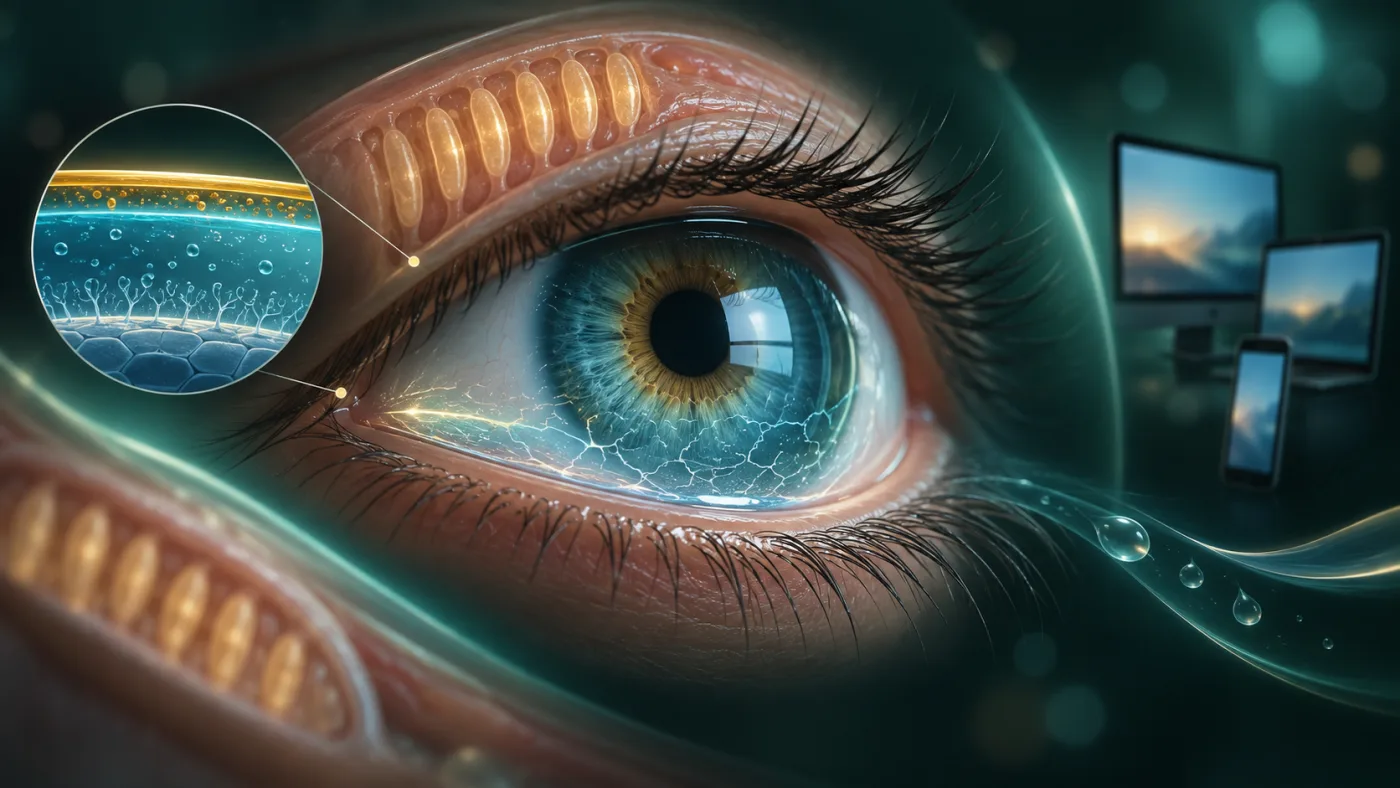
غدد ميبوميان: السبب الذي يفوته ناس كتير
على حافة الجفن توجد غدد ميبوميان التي تفرز الطبقة الدهنية من الدموع. لو الإفراز أصبح سميكًا أو الغدد انسدت، تتبخر الدموع بسرعة أكبر. لذلك قد يكون عند المريض "كمية دموع" جيدة لكن جودة الغشاء الدمعي سيئة.
خلل غدد ميبوميان من أهم محركات جفاف العين التبخري، ولذلك تقييم حافة الجفن ونوعية الإفراز والرمش جزء أساسي من التشخيص، خصوصًا عند مستخدمي الشاشات والعدسات اللاصقة.
الشاشات لا "تحرق" العين، لكنها تغيّر طريقة الرمش
أثناء التركيز في الكمبيوتر أو الموبايل يقل معدل الرمش وقد يصبح الرمش غير كامل. ده يزيد تبخر الدموع ويطيل وقت تعرض القرنية للهواء. التكييف والهواء الجاف والدخان يزيدوا المشكلة.
الحل ليس مجرد تقليل وقت الشاشة بشكل عشوائي، بل تنظيم فترات الراحة، تذكّر الرمش الكامل، ضبط اتجاه الهواء، وعلاج أي MGD أو التهاب موجود أصلًا.
كيف يتم التشخيص الحديث؟
TFOS DEWS III حدّث منهج التشخيص وأكد أهمية الجمع بين الأعراض واختبارات تدل على فقدان homeostasis. الطبيب قد يستخدم استبيان أعراض، يقيس tear breakup time، يفحص صبغات سطح العين، يقيم osmolarity في مراكز معينة، ويفحص الجفون وغدد ميبوميان.
الهدف مش تجميع أرقام؛ الهدف تحديد subtype أو مجموعة الأسباب التي تجعل الخطة علاجًا موجهًا بدل تجربة قطرات عشوائية.
العلاج: طبقات وليس "قطرة واحدة لكل الناس"
في الحالات البسيطة قد تكون الدموع الصناعية وتعديل البيئة كافيين. لو المشكلة مرتبطة بـMGD، تدخل الكمادات الدافئة ونظافة الجفون وبعض العلاجات داخل العيادة حسب الحالة. في وجود التهاب واضح قد يحتاج المريض أدوية موضعية مضادة للالتهاب أو immunomodulatory treatment تحت إشراف الطبيب.
الحالات الأشد قد تستفيد من سدادات القنوات الدمعية في ظروف مناسبة، قطرات مصل ذاتي، عدسات صُلبية، أو خيارات أخرى. DEWS III يركز على توجيه العلاج حسب المسبب بدل ترتيب جامد يصلح لكل مريض.
جفاف العين قبل وبعد الليزك
أي مريض يفكر في تصحيح النظر يجب أن يتقيم سطح عينه أولًا. جفاف العين قبل الجراحة قد يزيد الأعراض بعد العملية ويؤثر حتى على دقة القياسات. علاج سطح العين قبل الجراحة جزء من جودة التخطيط، وليس خطوة تجميلية.
لو الأعراض ظهرت بعد الليزك، أغلب الحالات تتحسن مع الوقت والعلاج المناسب، لكن وجود أعراض شديدة أو مستمرة يحتاج إعادة تقييم للـocular surface والأعصاب والالتهاب وليس تكرار نفس القطرة بلا خطة.
الخلاصة
أفضل سؤال في جفاف العين ليس "أنهي قطرة أقوى؟"، بل "إيه السبب المسيطر عندي؟". عندما يتحدد السبب، يصبح العلاج أكثر منطقية: تحسين طبقة الدموع، علاج غدد الجفن، تقليل الالتهاب، تعديل البيئة، أو معالجة عامل دوائي أو مناعي حسب الحالة.
أسئلة شائعة
هل جفاف العين ممكن يسبب زغللة؟
نعم، عدم استقرار الغشاء الدمعي قد يسبب زغللة متقطعة تتحسن أحيانًا بعد الرمش.
هل الدموع الصناعية تكفي لكل الحالات؟
لا. هي مفيدة لكثير من المرضى، لكن MGD أو الالتهاب أو الأسباب المناعية قد تحتاج علاجًا إضافيًا.
هل الشاشات تسبب جفاف العين؟
تزيد الأعراض عند كثير من الناس بسبب انخفاض معدل الرمش والرمش غير الكامل، خصوصًا مع التكييف والهواء الجاف.
هل جفاف العين يمنع عملية تصحيح النظر؟
الجفاف غير المسيطر عليه قد يؤجل الجراحة ويحتاج علاجًا قبل إعادة تقييم الملاءمة.
ملاحظة طبية: هذا المحتوى للتثقيف ولا يُغني عن فحص طبيب العيون، خصوصًا عند وجود فقدان مفاجئ للرؤية أو ألم شديد أو أعراض طارئة.
English version
Dry Eye in 2026: Why "Not Enough Tears" Is No Longer an Adequate Explanation
Why can a dry eye actually water?
One of the most confusing features of dry-eye disease is that a dry eye can look watery. Ocular-surface irritation can trigger reflex tearing, but reflex tears do not necessarily create a stable, high-quality tear film. Patients may experience burning, grittiness, light sensitivity, fluctuating blur or screen-related fatigue even when their eyes appear to water.
TFOS DEWS III emphasizes that dry eye is a multifactorial disease involving loss of tear-film or ocular-surface homeostasis, not simply a shortage of tear volume.
Meibomian glands: a major driver that is often missed
The meibomian glands along the eyelid margin produce the lipid layer of the tear film. If these glands become obstructed or their secretions change, tears evaporate more quickly. A patient may therefore produce an adequate amount of tears yet still have an unstable ocular surface.
Meibomian-gland dysfunction is a major contributor to evaporative dry eye, which is why lid-margin examination, gland function and blink quality are important parts of assessment.
Screens do not "burn" the eye, but they change blinking behavior
During concentrated screen use, blink rate often decreases and blinks may become incomplete. This increases evaporation and ocular-surface exposure. Air-conditioning, dry environments, wind and smoke can add to the problem.
Management is not simply "stop using screens." It may include scheduled visual breaks, complete blinking, changing airflow and treating underlying gland dysfunction or inflammation.
How is dry eye diagnosed in modern practice?
The TFOS DEWS III diagnostic framework combines symptoms with objective evidence of disturbed homeostasis. Clinicians may use symptom questionnaires, non-invasive tear break-up time, ocular-surface staining, osmolarity in selected settings, and detailed evaluation of the eyelids and meibomian glands.
The purpose is not to collect numbers for their own sake. It is to identify the disease drivers so treatment can be targeted rather than based on random trial-and-error lubricants.
Treatment is layered, not one drop for everyone
Mild disease may improve with suitable lubricants and environmental changes. If meibomian-gland dysfunction is prominent, warm compresses, lid care and selected in-office treatments may be useful. When inflammation is significant, prescription anti-inflammatory or immunomodulatory therapy may be indicated under medical supervision.
More severe disease can require punctal occlusion in selected patients, biological tear substitutes such as autologous serum, scleral lenses or other therapies. DEWS III favors cause-directed treatment rather than a rigid one-size-fits-all ladder.
Dry eye before and after refractive surgery
Anyone considering laser vision correction should have the ocular surface assessed before surgery. Pre-existing dry eye can worsen postoperative symptoms and can reduce the repeatability of refractive and corneal measurements.
If dry-eye symptoms occur after refractive surgery, many cases improve with time and appropriate management. Persistent or severe symptoms deserve a fresh evaluation of the ocular surface, lid glands, inflammation and neurosensory factors rather than indefinite repetition of the same lubricant.
Bottom line
The useful question in dry eye is not "Which drop is strongest?" It is "What is driving my disease?" Once the main mechanism is identified, treatment can address tear-film quality, eyelid glands, inflammation, environment or systemic and medication-related contributors in a rational way.
Frequently asked questions
Can dry eye cause blurry vision?
Yes. Tear-film instability can cause fluctuating blur that sometimes improves temporarily after blinking.
Are artificial tears enough for every case?
No. They help many patients, but meibomian-gland disease, inflammation or systemic causes may require additional targeted treatment.
Do screens cause dry eye?
They can worsen symptoms because blink rate and blink completeness often decrease during concentrated screen use.
Does dry eye prevent laser vision correction?
Uncontrolled dry eye can delay surgery and should be treated before candidacy is reassessed.
Medical note: This content is for education and does not replace an examination by an ophthalmologist, particularly for sudden vision loss, severe pain or other urgent symptoms.