ليه الجلوكوما خطيرة رغم إن المريض ممكن يكون شايف كويس؟
في الأنواع الشائعة من الجلوكوما، خصوصًا open-angle glaucoma، فقدان الرؤية الطرفية قد يتطور ببطء لدرجة أن المريض لا يلاحظه في البداية. لذلك الاعتماد على الأعراض وحدها خطر. التشخيص يعتمد على فحص العصب البصري، قياس ضغط العين، OCT، اختبار مجال الإبصار، وقياسات أخرى حسب الحالة.
كمان مهم نعرف إن ضغط العين المرتفع عامل خطر رئيسي لكنه ليس تعريف المرض بالكامل. بعض المرضى عندهم ضغط مرتفع بدون تلف عصب، والبعض قد يحدث عندهم تلف جلوكوما رغم قياسات ضغط تبدو ضمن النطاق المعتاد.
هدف العلاج: حماية العصب عن طريق خفض الضغط
لا يوجد حتى الآن علاج يعيد ألياف العصب البصري التي فُقدت بسبب الجلوكوما. لذلك الهدف هو إبطاء أو إيقاف progression قدر الإمكان بخفض ضغط العين إلى target مناسب لكل مريض.
الخيارات تشمل قطرات خفض الضغط، SLT laser، وإجراءات جراحية بدرجات مختلفة. القرار يعتمد على شدة المرض، مستوى الضغط، سرعة التدهور، العمر، الأمراض المصاحبة، ومدى قدرة المريض على الالتزام بالعلاج.
ما هو SLT؟
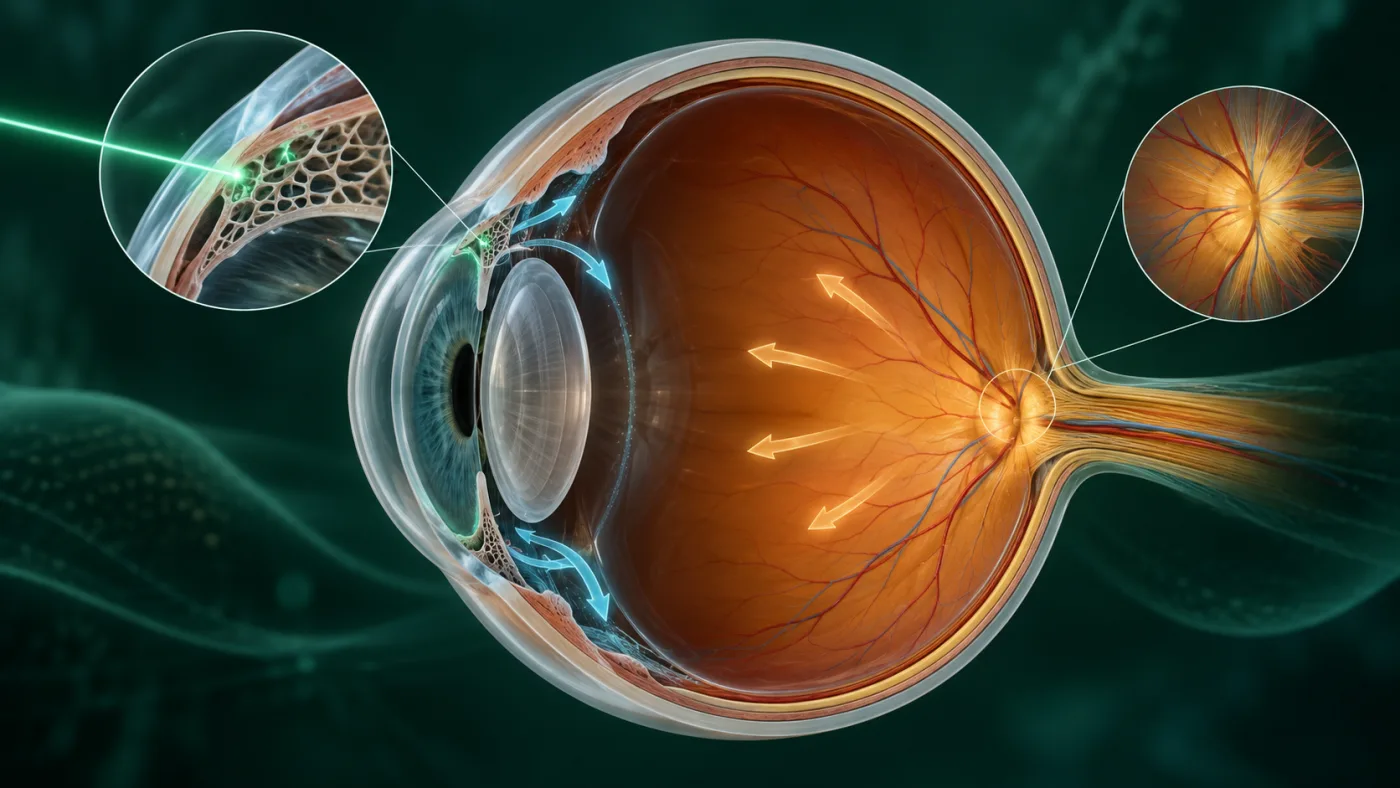
Selective laser trabeculoplasty يستخدم طاقة ليزر تستهدف منطقة تصريف السائل داخل العين للمساعدة على تحسين خروج السائل وخفض الضغط. يتم عادة كإجراء بالعيادة، ويختلف عن ليزر الزاوية المغلقة مثل peripheral iridotomy.
الـNational Eye Institute يوضح أن trabeculoplasty يُستخدم لعلاج open-angle glaucoma، وأن الاستجابة تحتاج متابعة لأن الليزر لا يعمل بنفس الكفاءة عند كل الناس وقد يقل تأثيره مع الوقت.
ما الجديد في فكرة "الليزر أولًا"؟
لسنوات طويلة كان التصور الشائع أن المريض يبدأ قطرات ثم ينتقل لليزر عند الحاجة. تجربة LiGHT غيرت جزءًا مهمًا من هذا التفكير. المتابعة لست سنوات أظهرت أن بدء العلاج بـSLT كان فعالًا وآمنًا وذا قيمة سريرية في مرضى open-angle glaucoma أو ocular hypertension غير المعالجين سابقًا.
تحليل منشور في 2025 لسرعة تدهور مجال الإبصار وجد أن مجموعة SLT-first كان لديها معدل أبطأ لتدهور المجال مقارنة بمجموعة drops-first، وكان الفرق أوضح في الجلوكوما البسيطة. هذا لا يعني أن SLT هو الخيار الأول لكل مريض، لكنه يجعل مناقشته في الزيارة الأولى منطقية جدًا في حالات مناسبة.
إمتى تظل القطرات مهمة؟
القطرات ما زالت علاجًا أساسيًا وفعالًا. بعض المرضى لا يناسبهم الليزر، وبعضهم يحتاج قطرات بعد SLT للوصول للضغط المستهدف، وبعض الحالات المتقدمة تحتاج جراحة مبكرًا. الفكرة ليست "ليزر بدل القطرات دائمًا"، بل اختيار استراتيجية تقلل progression وتناسب المريض.
الالتزام مهم جدًا. قطرة ممتازة لا تعمل لو لم تُستخدم بالشكل الصحيح، والآثار الجانبية أو التكلفة أو صعوبة الاستخدام قد تجعل الليزر مفيدًا لبعض المرضى.
الخلاصة
في 2026، من المفيد أن يعرف المريض أن SLT ليس مجرد "خطة بديلة بعد فشل القطرات". في حالات open-angle glaucoma أو ocular hypertension المناسبة، قد يكون خيارًا أوليًا مبنيًا على دليل قوي. لكن الهدف النهائي ثابت: حماية العصب البصري لسنوات، والمتابعة المنتظمة أهم من أي إجراء منفرد.
أسئلة شائعة
هل ارتفاع ضغط العين يعني جلوكوما؟
ليس دائمًا. ارتفاع الضغط عامل خطر، لكن تشخيص الجلوكوما يعتمد على وجود أو خطر تلف بالعصب البصري مع باقي الفحوص.
هل SLT يلغي القطرات نهائيًا؟
عند بعض المرضى قد يقلل أو يؤخر الحاجة للقطرات، لكن آخرين يحتاجون قطرات لاحقًا أو من البداية.
هل الليزر مؤلم؟
عادةً يُجرى بقطرات تخدير موضعي ويكون الانزعاج محدودًا، لكن قد يحدث تهيج أو ارتفاع ضغط مؤقت ويحتاج متابعة.
هل فقدان النظر من الجلوكوما يرجع؟
التلف العصبي الموجود عادة لا يعود، لذلك التشخيص المبكر وإيقاف progression هما الهدف الأساسي.
ملاحظة طبية: هذا المحتوى للتثقيف ولا يُغني عن فحص طبيب العيون، خصوصًا عند وجود فقدان مفاجئ للرؤية أو ألم شديد أو أعراض طارئة.
English version
Glaucoma and Eye Pressure: Can SLT Laser Be a First-Line Treatment?
Why is glaucoma dangerous even when vision seems normal?
In common forms of glaucoma, especially open-angle glaucoma, peripheral visual loss can progress slowly enough that the patient notices little in the early stages. Symptoms are therefore a poor screening tool. Diagnosis relies on optic-nerve examination, intraocular pressure, OCT imaging, visual-field testing and other measurements as needed.
High eye pressure is a major risk factor, but it is not the full definition of glaucoma. Some people have ocular hypertension without nerve damage, while others develop glaucomatous damage at pressure readings that appear statistically normal.
The treatment goal: protect the optic nerve by lowering pressure
Current treatment cannot restore retinal ganglion cells and optic-nerve fibers already lost to glaucoma. The practical goal is therefore to slow or stop progression by lowering intraocular pressure to an individualized target.
Options include pressure-lowering drops, selective laser trabeculoplasty and surgical procedures of varying intensity. The choice depends on disease severity, baseline pressure, rate of progression, age, comorbidities and the patient's ability to use long-term therapy consistently.
What is SLT?
Selective laser trabeculoplasty applies laser energy to the trabecular drainage system to improve aqueous outflow and reduce intraocular pressure. It is generally an office-based procedure and is different from laser peripheral iridotomy used for angle-closure mechanisms.
The National Eye Institute notes that trabeculoplasty is used for open-angle glaucoma. Response varies, follow-up remains essential and the pressure-lowering effect can diminish over time.
What changed the "drops first" mindset?
For many years, the conventional pathway was to start drops and consider laser later. The LiGHT trial substantially changed this discussion. Six-year follow-up showed that primary SLT was clinically effective in previously untreated open-angle glaucoma and ocular hypertension.
A 2025 analysis of visual-field progression from the LiGHT cohort found a slower mean rate of visual-field loss in the SLT-first arm than in the drops-first arm, with the clearest difference in mild open-angle glaucoma. This does not make SLT the universal first choice, but it strongly supports discussing it early in suitable patients.
When are drops still important?
Pressure-lowering medications remain effective and essential. Some patients are not suitable for SLT, some still need medication after laser to reach target pressure, and advanced disease may require surgery sooner. The goal is not "laser instead of drops at all costs"; it is durable pressure control with a plan the patient can sustain.
Adherence matters. A highly effective medication cannot protect the nerve if it is not used reliably, and side effects, cost or difficulty administering drops can make laser particularly attractive for some patients.
Bottom line
In 2026, patients should know that SLT is not merely a backup option after eye drops fail. In appropriate open-angle glaucoma or ocular-hypertension cases, it can be an evidence-based first-line strategy. The long-term priority remains the same: protect the optic nerve through regular monitoring and sustained pressure control.
Frequently asked questions
Does high eye pressure always mean glaucoma?
No. Ocular hypertension is a risk state; glaucoma diagnosis depends on optic-nerve damage or risk of progressive damage together with the full clinical assessment.
Does SLT permanently eliminate the need for drops?
Not always. It may reduce or delay medication use in some patients, while others still require drops to reach target pressure.
Is SLT painful?
It is typically performed with topical anesthetic drops and is usually well tolerated. Temporary irritation or pressure changes can occur, so follow-up is important.
Can glaucoma vision loss be reversed?
Established optic-nerve damage is generally irreversible. Early diagnosis and slowing progression are therefore critical.
Medical note: This content is for education and does not replace an examination by an ophthalmologist, particularly for sudden vision loss, severe pain or other urgent symptoms.