
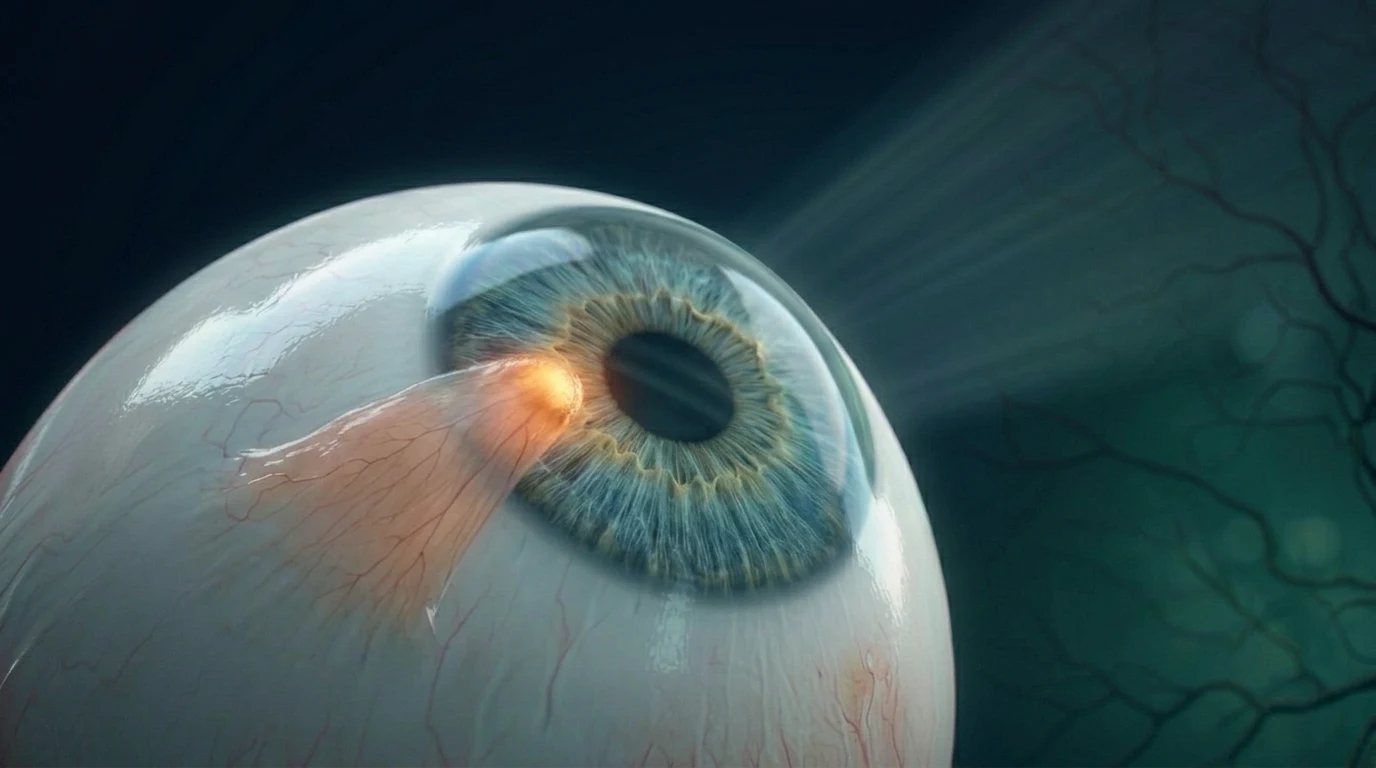
الظفرة، أو لحمية العين، هي نمو نسيجي من ملتحمة العين يمتد ناحية القرنية. ترتبط بالتعرض للشمس والهواء والغبار وجفاف سطح العين. إذا كانت صغيرة ولا تؤثر على النظر، يمكن متابعتها مع ترطيب العين وحمايتها من الأشعة فوق البنفسجية. تُناقش الجراحة عندما تكبر أو تسبب التهابًا متكررًا أو تغيّر شكل القرنية أو تقترب من مركز النظر.
هل الظفرة خطيرة؟
غالبًا تكون الظفرة حميدة وليست ورمًا سرطانيًا، لكنها قد تسبب إحساسًا بجسم غريب، احمرارًا، حكة أو جفافًا. عندما تمتد إلى القرنية قد تغير شكلها وتسبب استجماتيزمًا وزغللة.
شكلها لا يكفي للتشخيص دائمًا. نمو سريع أو كتلة غير منتظمة أو نزيف متكرر يستحق فحصًا للتأكد من السبب.
متى نراقبها؟
إذا كانت الظفرة بعيدة عن مركز القرنية ولا تعطل الرؤية، تكون المتابعة الدورية مع دموع صناعية عند الحاجة خيارًا مناسبًا. تجنب الهواء المباشر والدخان، وارتدِ نظارة شمسية واسعة تحجب UVA وUVB.
القطرات المرطبة تخفف الأعراض لكنها لا تذيب النسيج. قطرات مضادة للالتهاب لا تُستخدم إلا لفترة يحددها الطبيب عند وجود التهاب واضح.
متى تُطرح الجراحة؟
تُناقش الجراحة إذا اقتربت الظفرة من مركز النظر، أو سببت استجماتيزمًا أو ضعفًا في الرؤية، أو تكررت التهاباتها رغم العلاج، أو كان شكلها مزعجًا بعد فهم احتمال عودتها.
الجراحة تزيل النسيج وتستخدم غالبًا طُعمًا من ملتحمة المريض أو تقنية أخرى لتقليل احتمال عودة الظفرة. الاختيار يعتمد على الحجم والمكان وحالة سطح العين وخبرة الجراح.
التعافي وتقليل فرصة الرجوع
بعد الإزالة قد يحدث احمرار وإحساس بالخشونة لعدة أيام أو أسابيع، وتحتاج العين قطرات ومتابعة. لا تفرك العين ولا تعرضها للغبار أو الماء غير النظيف خلال فترة الالتئام.
الرجوع ممكن حتى بعد جراحة جيدة، خصوصًا مع التعرض المستمر للشمس. الحماية من UV وترطيب سطح العين والمتابعة المبكرة عند ظهور نمو جديد خطوات مهمة.
علامات لا تنتظر معها
ألم شديد، انخفاض سريع في النظر، إفرازات كثيفة، بقعة بيضاء على القرنية أو احمرار لا يهدأ قد تشير إلى التهاب أو مشكلة أخرى وليست مجرد ظفرة. اطلب فحصًا عاجلًا بدل زيادة القطرات من نفسك.
أسئلة شائعة
هل يمكن أن تختفي الظفرة بالقطرات؟
القطرات قد تقلل الجفاف والالتهاب، لكنها لا تزيل النسيج الموجود على القرنية.
هل كل ظفرة تحتاج عملية؟
لا. كثير من الحالات الصغيرة تُراقب، والجراحة تُناقش إذا أثرت في النظر أو الراحة أو الشكل، بعد أن يشرح الطبيب احتمال عودتها وما تتضمنه العملية.
هل الظفرة تعود بعد الإزالة؟
نعم، احتمال الرجوع موجود. تقنيات الطعم والحماية من الشمس تساعد على تقليله لكنها لا تلغيه.
هل الظفرة بسبب استخدام الموبايل؟
الموبايل قد يزيد الجفاف بسبب قلة الرمش، لكنه ليس السبب الأساسي للظفرة مثل الأشعة فوق البنفسجية والهواء والغبار.
تنبيه مهم: هذا المحتوى للتوعية ولا يغني عن الكشف عند طبيب العيون. إذا حدث فقدان مفاجئ في النظر، أو ألم شديد، أو ومضات جديدة، احجز فحصًا عاجلًا.
English version
Pterygium: When Can It Be Observed and When Is Surgery Considered?
Is a pterygium dangerous?
A pterygium is usually benign rather than a cancerous tumor, but it can cause foreign-body sensation, redness, itch and dryness. Extension onto the cornea can induce astigmatism and blur.
Appearance alone is not always enough. Rapid growth, an irregular mass or recurrent bleeding deserves examination to confirm the diagnosis.
When can it be observed?
If the lesion is away from the visual axis and does not affect vision, periodic review with lubricating drops as needed is reasonable. Limit direct wind and smoke and use wraparound UV-blocking sunglasses.
Lubricants relieve symptoms but do not dissolve the tissue. Anti-inflammatory drops should be prescribed for a defined period when active inflammation is present.
When is surgery considered?
Surgery may be discussed when the pterygium approaches the visual axis, induces astigmatism or visual loss, causes recurrent inflammation despite treatment or creates a significant cosmetic concern after recurrence risk is understood.
Excision is often combined with a conjunctival autograft or another technique intended to lower recurrence. The approach depends on size, location, ocular surface and surgeon experience.
Recovery and recurrence
Redness and surface irritation can last days to weeks after excision, and drops and follow-up are needed. Avoid rubbing the eye and protect it from dust and contaminated water while it heals.
Recurrence is possible even after good surgery, especially with continued UV exposure. UV protection, ocular-surface care and early review of new growth are important.
Red flags
Severe pain, rapid vision loss, thick discharge, a white corneal spot or redness that does not settle can indicate infection or another problem rather than a simple pterygium. Seek assessment instead of adding random drops.
Frequently asked questions
Can drops make a pterygium disappear?
Drops can reduce dryness and inflammation, but they do not remove established tissue on the cornea.
Does every pterygium need surgery?
No. Many small lesions are observed. Surgery is discussed when vision, comfort or appearance is meaningfully affected.
Can a pterygium come back after removal?
Yes. Grafting techniques and UV protection can lower recurrence risk but cannot eliminate it.
Is pterygium caused by phone use?
Phone use can worsen dryness through reduced blinking, but UV exposure, wind and dust are more established pterygium risks.
Medical note: This content is for education and does not replace an ophthalmic examination. Sudden vision loss, severe pain or new flashes require urgent assessment.
المراجع الطبية | Medical references
- National Eye Institute. Other types of corneal disease.
- National Eye Institute. Protecting your eyes from the sun's UV light.
- Alves M, et al. TFOS Lifestyle Report: Impact of environmental conditions on the ocular surface. The Ocular Surface. 2023;29:1-52. DOI 10.1016/j.jtos.2023.04.007.
- Adjuvant topical cyclosporine after primary pterygium surgery: systematic review and meta-analysis. American Journal of Ophthalmology. 2025. DOI 10.1016/j.ajo.2025.06.020. PMID 40562088.
- Primary pterygium excision surgery: risk factors and clinical outcomes. Cureus. 2024. DOI 10.7759/cureus.62440. PMID 38882219.
- American Academy of Ophthalmology EyeWiki. Pterygium.