
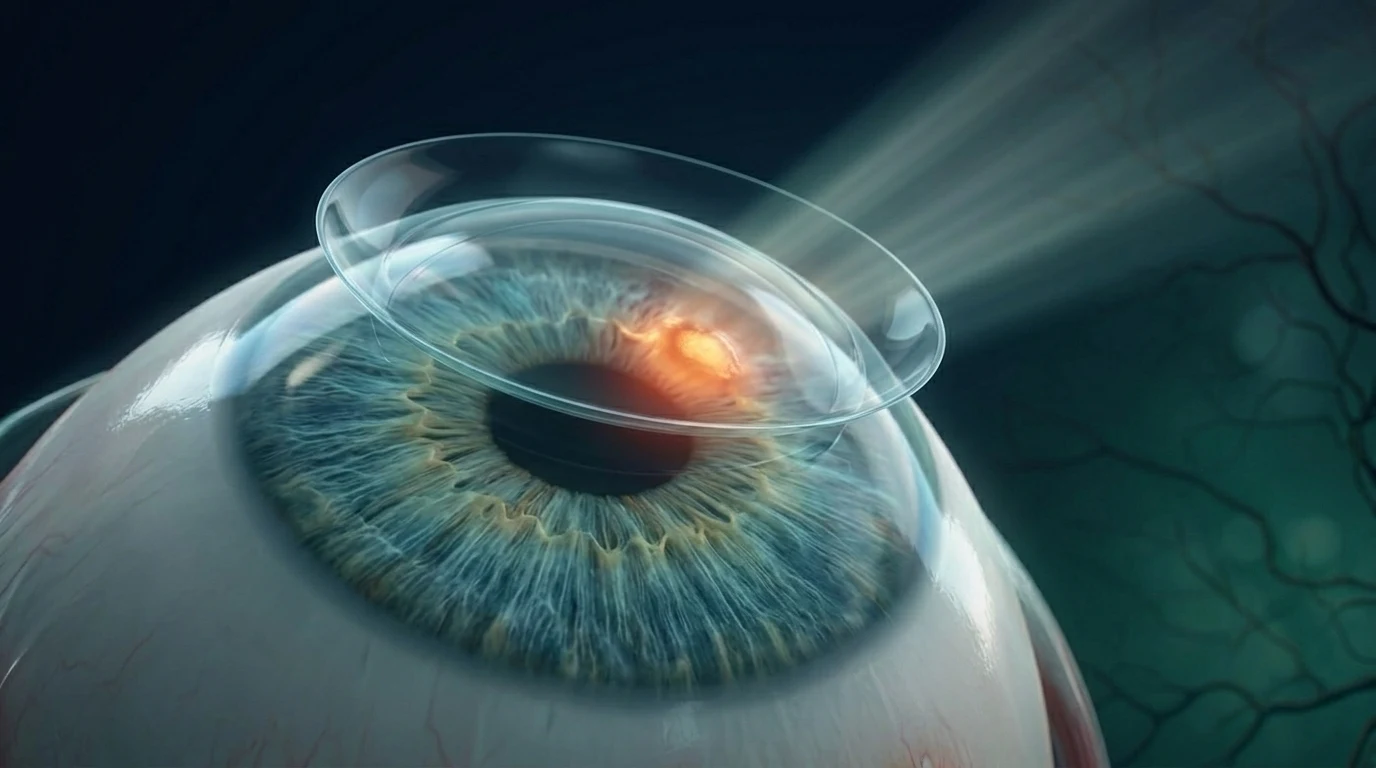
العين الحمراء المؤلمة مع حساسية للضوء أو زغللة عند مستخدم العدسات اللاصقة قد تعني التهابًا أو قرحة في القرنية، وهذه حالة لا تنتظر. أزل العدسة فورًا، ولا تلبسها ثانية، ولا تستخدم قطرات كورتيزون أو مضادًا حيويًا من تلقاء نفسك. اذهب لطبيب العيون في نفس اليوم لأن العلاج المبكر يحمي القرنية.
كيف أفرق بين الجفاف والعدوى؟
الجفاف أو الحساسية قد يسببا حكة ودموعًا أو إحساسًا بالرمل في العينين، لكن العدوى تميل إلى ألم واضح، حساسية للضوء، زغللة، إفرازات أو نقطة بيضاء على القرنية. لا يمكن تأكيد الفرق في المنزل.
حتى لو كان الاحمرار بسيطًا، وجود عدسة لاصقة يرفع أهمية الفحص لأن الميكروبات قد تتكاثر بين العدسة والقرنية بسرعة.
الخطوات الأولى قبل الوصول للطبيب
اغسل يديك وأزل العدسة. احتفظ بها في علبتها إذا طلب الطبيب فحصها، لكن لا تضعها مرة أخرى ولا تستخدم محلولًا قديمًا. أوقف العدسات في العين الأخرى إذا ظهرت بها أعراض أيضًا.
لا تغط العين، ولا تستخدم قطرات التخدير أو الكورتيزون أو وصفة قديمة. المسكن الفموي المعتاد قد يساعد مؤقتًا إن كان مناسبًا لك طبيًا، لكنه لا يؤخر الفحص.
كيف يفحص الطبيب القرنية؟
يفحص الطبيب سطح القرنية بجهاز المصباح الشقي، وقد يستخدم صبغة الفلوريسئين لمعرفة حجم القرحة ومكانها. أحيانًا تؤخذ عينة من سطح القرنية للمزرعة إذا كانت الإصابة كبيرة أو عميقة أو لا تتحسن كما ينبغي.
حدة النظر، عمق الالتهاب، ضغط العين، وحالة الجفن والدموع كلها تساعد في تحديد العلاج. العدسة نفسها قد تحتوي على ميكروبات أو ترسبات، لذلك لا تُرمى قبل سؤال الطبيب إذا كان فحصها مفيدًا.
العلاج يحتاج التزامًا ومراجعة
العلاج غالبًا يكون بمضاد ميكروبي موضعي يحدده الطبيب وقد يحتاج جرعات متقاربة في البداية. الحالات الشديدة أو العميقة قد تحتاج علاجًا مركبًا، متابعة يومية، أو تدخلًا جراحيًا لحماية النسيج.
لا توقف الدواء بمجرد اختفاء الألم، ولا تضف كورتيزون إلا بعد أن يتأكد الطبيب من السيطرة على العدوى. الندبة قد تؤثر على النظر حتى بعد شفاء الالتهاب، ولذلك المتابعة مهمة.
كيف نمنع تكرار المشكلة؟
تجنب النوم بالعدسات، إلا إذا أوصى طبيبك صراحةً بخلاف ذلك، ولا تسبح أو تستحم بها. اغسل يديك، واستخدم محلولًا جديدًا، وبدّل العلبة، والتزم بموعد تغيير العدسات. الماء والصابون ليسا محلول عدسات.
إذا تكرر الاحمرار أو الجفاف، راجع مقاس العدسة وساعات استخدامها وحالة سطح العين مع طبيبك. العدسات اليومية قد تقلل بعض مصادر التلوث إذا استُخدمت بشكل صحيح، لكنها ليست خالية من المخاطر.
أسئلة شائعة
هل أستطيع الانتظار ليومين إذا كان الألم محتملًا؟
لا يُنصح بذلك عند مستخدم العدسات. الألم أو الحساسية للضوء أو ضعف النظر قد يعني التهاب قرنية يحتاج علاجًا في نفس اليوم.
هل أستخدم قطرة مضاد حيوي من الصيدلية؟
اختيار قطرة المضاد الحيوي وتركيزها ومواعيد استخدامها يعتمد على فحص القرنية وشدة الحالة. استخدم العلاج الذي يصفه طبيب العيون فقط.
هل العدسات اليومية تمنع العدوى تمامًا؟
لا. قد تقلل بعض مصادر التلوث لكنها لا تلغي مخاطر سوء الاستخدام أو النوم أو ملامسة الماء للعدسة.
متى أعود للعدسات بعد الشفاء؟
بعد فحص الطبيب واكتمال شفاء القرنية وتغيير العدسات والعلبة عند الحاجة، وليس بمجرد اختفاء الاحمرار.
تنبيه مهم: هذا المحتوى للتوعية ولا يغني عن الكشف عند طبيب العيون. إذا حدث فقدان مفاجئ في النظر، أو ألم شديد، أو ومضات جديدة، احجز فحصًا عاجلًا.
English version
Contact Lenses and Corneal Infection: Warning Signs That Should Not Wait
Dryness versus infection
Dryness or allergy may cause itch, watering and a gritty feeling, while infection is more concerning when there is significant pain, photophobia, blur, discharge or a white corneal spot. Home appearance cannot confirm the difference.
Even mild redness deserves attention in a lens wearer because microbes can multiply between the lens and cornea.
What to do before care
Wash your hands and remove the lens. Keep it in its case only if the clinician asks to examine it, but never reinsert it or reuse old solution. Stop lenses in the other eye if it develops symptoms too.
Do not patch the eye or use anesthetic, steroid or leftover prescription drops. A usual oral pain reliever may help temporarily if medically suitable, but it must not delay examination.
How is the cornea examined?
The cornea is examined at the slit lamp and fluorescein can show the size and location of an epithelial defect or ulcer. A culture may be taken when the lesion is large, deep or not responding as expected.
Visual acuity, inflammation depth, pressure, eyelids and tear film all guide treatment. The lens can carry organisms or deposits, so ask before discarding it if testing might help.
Treatment needs adherence
Treatment commonly involves a clinician-selected topical antimicrobial, sometimes at frequent intervals at first. Severe or deep disease may need combination therapy, close review or surgery to protect tissue.
Do not stop when pain improves, and do not add a steroid until the clinician confirms infection is controlled. A scar can affect vision after the infection clears, so follow-up matters.
Preventing recurrence
Do not sleep in lenses unless specifically prescribed, and do not swim or shower in them. Wash hands, use fresh solution, replace the case and follow the replacement schedule. Tap water is not contact-lens solution.
If redness or dryness recurs, reassess fit, wear time and ocular-surface health. Daily disposables may reduce some contamination opportunities when used correctly, but they are not risk-free.
Frequently asked questions
Can I wait two days if the pain is tolerable?
No. In a contact-lens wearer, pain, photophobia or blur may indicate keratitis that needs same-day care.
Can I use an antibiotic drop from the pharmacy?
The drug and schedule depend on the corneal findings. Use only treatment prescribed after an eye examination.
Do daily lenses prevent infection completely?
No. They may reduce some contamination opportunities but do not remove risks from misuse, sleeping or water exposure.
When can I wear lenses again?
Only after the cornea has healed and the clinician clears lens wear, usually with a fresh lens and case when appropriate.
Medical note: This content is for education and does not replace an ophthalmic examination. Sudden vision loss, severe pain or new flashes require urgent assessment.
المراجع الطبية | Medical references
- Contact Lens-Related Corneal Infections. Infectious Disease Clinics of North America. 2024;38:795-811. DOI 10.1016/j.idc.2024.07.010. PMID 39271302.
- A comprehensive review of microbial biofilms on contact lenses. Infection and Drug Resistance. 2024. DOI 10.2147/IDR.S463779. PMID 38947374.
- Infectious keratitis management: 10-year update. Journal of Clinical Medicine. 2025. DOI 10.3390/jcm14175987. PMID 40943747.
- Outcomes of contact lens-associated keratitis and an evidence-based management protocol. British Journal of Ophthalmology. 2024. DOI 10.1136/bjo-2024-325637. PMID 39009420.
- Craig JP, et al. TFOS Lifestyle Report: Ocular Surface Disease. The Ocular Surface. 2023;30:240-253. DOI 10.1016/j.jtos.2023.08.009.