قبل ما تسأل: إيه أفضل عملية؟ اسأل: إيه الأنسب لعيني؟
لو بتفكر في تصحيح النظر، طبيعي جدًا تسمع أسماء كتير: فيمتو ليزك، SMILE، PRK، وأحيانًا تقنيات موجهة بالـtopography أو الـwavefront. المشكلة إن السؤال الشائع "مين الأفضل؟" مش هو السؤال الطبي الأدق. الجراحة الناجحة تبدأ من اختيار الإجراء المناسب للعين المناسبة، مش من اختيار الاسم الأشهر.
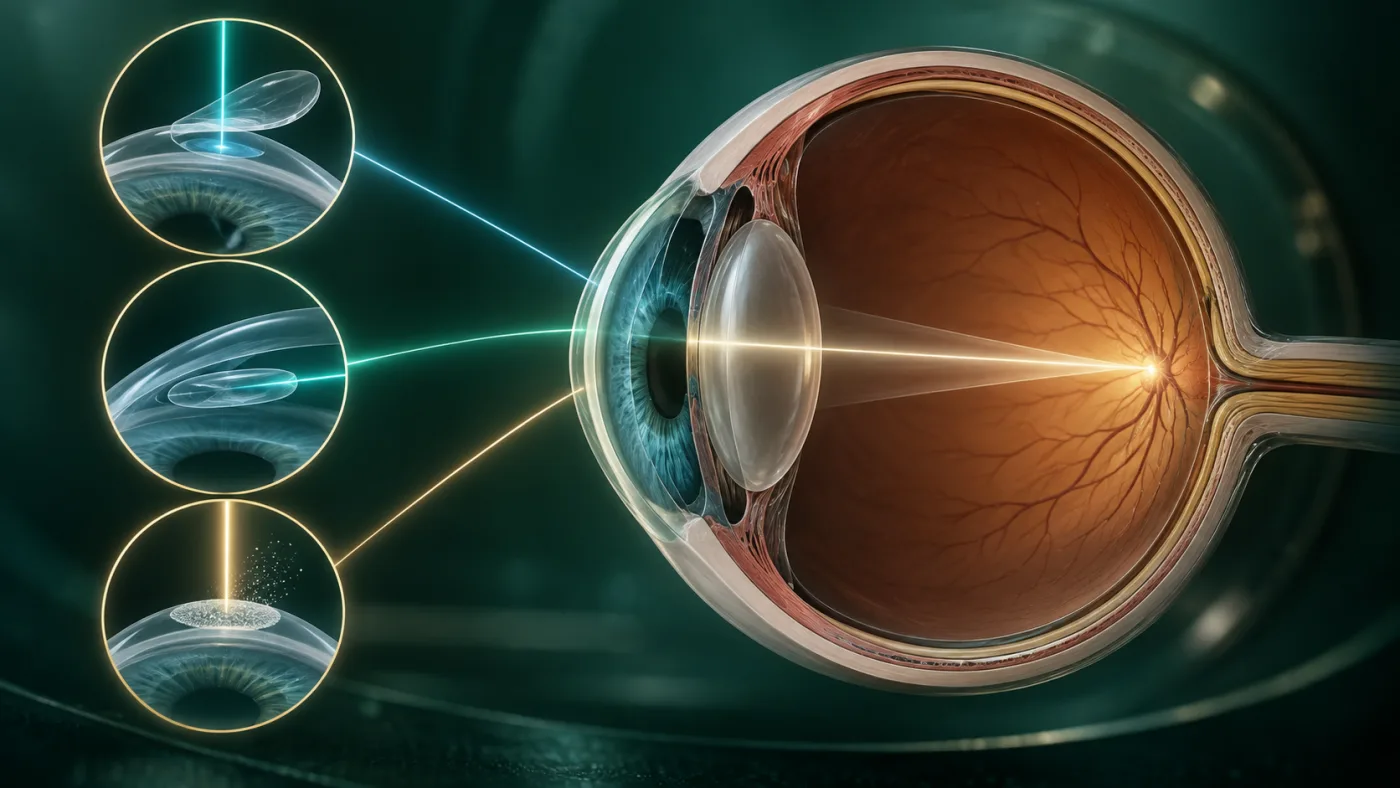
الفيمتو ليزك يعتمد على تكوين flap رقيق بالـfemtosecond laser ثم إعادة تشكيل القرنية بالـexcimer laser. أما SMILE فيعتمد على إزالة عدسة نسيجية صغيرة من داخل القرنية من خلال فتحة صغيرة بدون flap تقليدي. وPRK يعيد تشكيل سطح القرنية بعد التعامل مع الطبقة الطلائية، ولذلك لا يوجد flap أيضًا، لكن التعافي السطحي أبطأ في الأيام الأولى.
ماذا تقول الأبحاث الحديثة عن النتائج؟
المراجعات الحديثة تقترح أن الفيمتو ليزك وSMILE متقاربان جدًا في الأمان والفاعلية والتوقعات عند تصحيح قِصر النظر والاستجماتيزم لدى المرشحين المناسبين. مراجعة منشورة في 2025 وصفت النتائج البصرية للطريقتين بأنها ممتازة ومتقاربة، مع ملاحظة أن SMILE قد يقلل مشكلات جفاف العين المرتبطة بقطع أعصاب القرنية، بينما يوفر FS-LASIK عادةً تعافيًا بصريًا أسرع في البداية.
مراجعة تحليلية أخرى قارنت SMILE بالـwavefront-guided LASIK ووجدت أن كلاهما فعال، مع بعض الفروق الدقيقة في تصحيح الاستجماتيزم وبعض aberrations البصرية. المعنى للمريض بسيط: الفروق ليست "جيد وسيئ"، لكنها فروق اختيار وتخصيص.
جفاف العين: نقطة لازم تتقاس قبل العملية، مش بعدها فقط
جفاف العين من أهم العوامل المؤثرة في الراحة وجودة الرؤية بعد جراحات تصحيح الإبصار. والـFDA ينبه إلى أن LASIK قد يزيد جفاف العين لدى بعض المرضى، لذلك وجود جفاف غير مسيطر عليه قبل الجراحة يستدعي العلاج والتقييم أولًا.
في المقارنات الحديثة، SMILE أظهر في بعض الدراسات ثباتًا أفضل للـtear film وحفاظًا أكبر على حساسية القرنية مقارنة بالفيمتو ليزك في الشهور الأولى. لكن ده لا يعني أن كل مريض عنده جفاف لازم يعمل SMILE؛ فشدة الجفاف، نوعه، حالة غدد ميبوميان، قياسات القرنية، ودرجة النظر كلها تدخل في القرار.
إيه الفحوص اللي بتحدد الاختيار فعليًا؟
الفحص الجيد قبل تصحيح النظر عادة يشمل قياس النظر بعد التأكد من ثباته، سمك القرنية، corneal topography/tomography، تقييم سطح العين والدموع، قياس حجم الحدقة في الإضاءة المنخفضة عند الحاجة، وفحص شامل للعين. الهدف هو استبعاد حالات مثل القرنية المخروطية أو الاشتباه في ضعف بنيوي بالقرنية، والجفاف غير المسيطر عليه، وبعض الأمراض أو الظروف التي قد ترفع المخاطر.
وجود قرنية رفيعة أو غير منتظمة، قرنية مخروطية، تغير مستمر في درجة النظر، أو أمراض عينية معينة قد يجعل LASIK غير مناسب، وقد يوجه الطبيب إلى PRK أو حل آخر أو حتى إلى تجنب تصحيح النظر بالليزر تمامًا.
متى قد يميل الطبيب لكل إجراء؟
قد يكون الفيمتو ليزك مناسبًا لشخص يريد تعافيًا سريعًا ولديه قرنية وسطح عين يسمحان بذلك. وقد يكون SMILE جذابًا لبعض مرضى قِصر النظر والاستجماتيزم خصوصًا عندما تكون مسألة جفاف العين أو تجنب الـflap مهمة. وقد يختار الجراح PRK في بعض العيون التي يكون فيها تجنب الـflap مفيدًا، مع ضرورة تفهم أن الألم السطحي والتعافي البصري قد يستغرقان وقتًا أطول في البداية.
لازم كمان نفرّق بين "إمكانية إجراء العملية" و"جودة الاختيار". المريض قد يكون صالحًا لأكثر من تقنية، لكن أفضل قرار يتحدد بعد مناقشة نمط حياته، عمله، الرياضات التي يمارسها، حساسيته لجفاف العين، وتوقعاته من الرؤية الليلية والقريبة.
الخلاصة
التكنولوجيا مهمة، لكن قيمة الجراحة الحقيقية في التشخيص والاختيار والتخطيط. لو اتقال لك إن إجراء واحد هو الأفضل لكل الناس بدون فحوص دقيقة أو مناقشة المخاطر والبدائل، فده تبسيط زائد. أفضل نتيجة تبدأ من خريطة قرنية سليمة، سطح عين مستقر، توقعات واقعية، وجراح يختار التقنية بناءً على بيانات عينك أنت.
أسئلة شائعة
هل الفيمتو ليزك أفضل من SMILE؟
مش بشكل مطلق. النتائج البصرية متقاربة جدًا في المرشحين المناسبين، لكن SMILE قد يكون ألطف على سطح العين في بعض المرضى، بينما الفيمتو ليزك غالبًا أسرع في التعافي البصري الأولي.
هل جفاف العين يمنع الليزك؟
الجفاف غير المسيطر عليه قد يؤجل أو يغير خطة الجراحة. الأفضل علاج السبب وتقييم سطح العين أولًا.
هل PRK قد يكون أفضل من الليزك؟
في بعض الحالات نعم، خصوصًا عندما يكون تجنب الـflap مفيدًا. لكنه يحتاج عادة فترة تعافٍ أطول في الأيام الأولى.
هل يمكن ضمان الاستغناء النهائي عن النظارة؟
لا توجد جراحة تضمن الاستغناء عن النظارة مدى الحياة. تغيرات العمر وخصوصًا presbyopia قد تفرض احتياجًا لنظارة قراءة لاحقًا.
ملاحظة طبية: هذا المحتوى للتثقيف ولا يُغني عن فحص طبيب العيون، خصوصًا عند وجود فقدان مفاجئ للرؤية أو ألم شديد أو أعراض طارئة.
English version
Femto-LASIK vs SMILE vs PRK: How to Choose the Right Vision-Correction Procedure in 2026
Before asking "Which procedure is best?", ask "Which is safest for my eyes?"
Patients considering laser vision correction often encounter several names: Femto-LASIK, SMILE, PRK, topography-guided LASIK and wavefront-guided treatments. The medically useful question is not which brand or procedure is universally best. It is which option best matches the patient's cornea, prescription, ocular surface and visual goals.
Femto-LASIK uses a femtosecond laser to create a thin corneal flap, followed by excimer-laser reshaping. SMILE removes a small stromal lenticule through a small incision and does not create a conventional flap. PRK reshapes the corneal surface after removal of the epithelium; it also avoids a flap, but surface healing and early visual recovery are slower.
What does recent evidence say about visual outcomes?
Recent reviews suggest that Femto-LASIK and SMILE provide excellent and broadly comparable safety, efficacy and predictability for appropriately selected patients with myopia and astigmatism. A 2025 review noted comparable visual outcomes, with SMILE potentially carrying a lower dry-eye burden and no flap-related complications, while FS-LASIK usually offers faster early visual recovery.
A 2024 meta-analysis comparing SMILE with wavefront-guided LASIK also found both procedures effective, with some differences in astigmatic correction and specific higher-order aberrations. These are not simple "good versus bad" differences; they are details that help surgeons personalize treatment.
Dry eye should be evaluated before surgery, not only treated afterward
Dry-eye disease is one of the most important factors affecting comfort and quality of vision after corneal refractive surgery. The U.S. FDA notes that LASIK can aggravate dry eye in some patients, which is why uncontrolled ocular-surface disease should be treated before elective surgery.
Recent comparative evidence suggests that SMILE may preserve corneal sensitivity and tear-film stability better than FS-LASIK during early follow-up. That does not mean every dry-eye patient should automatically choose SMILE. The type and severity of dry eye, meibomian-gland function, corneal measurements and refractive error all matter.
Which tests actually determine candidacy?
A high-quality preoperative assessment typically includes stable refraction, pachymetry, corneal topography or tomography, ocular-surface evaluation, and a complete eye examination. Pupil assessment and additional imaging may be required depending on the patient.
The goal is to detect conditions that increase risk, including keratoconus or suspicious corneal shape, inadequate tissue, uncontrolled dry eye, unstable prescription and other ocular disease. In some eyes, these findings may favor PRK, a lens-based solution, or no elective refractive surgery at all.
When might a surgeon lean toward each option?
Femto-LASIK may suit a patient who values fast visual recovery and has appropriate corneal and ocular-surface findings. SMILE may be attractive for selected patients with myopia or myopic astigmatism when avoiding a flap or minimizing early ocular-surface disruption is important. PRK may be preferred in selected eyes where flap avoidance is desirable, with the trade-off of more surface discomfort and slower early recovery.
Candidacy is not the same as optimal choice. A person may qualify for more than one procedure. Occupation, contact sports, dry-eye susceptibility, night-vision expectations, age, near-vision needs and refractive stability all influence the final recommendation.
Bottom line
Technology matters, but diagnosis and patient selection matter more. A responsible refractive-surgery consultation should explain alternatives, limitations and realistic outcomes. The best procedure is the one supported by your own corneal data, a stable ocular surface and a treatment plan designed around your eyes rather than a marketing label.
Frequently asked questions
Is Femto-LASIK better than SMILE?
Not universally. Visual outcomes are broadly comparable in suitable candidates. SMILE may have less early ocular-surface impact, while Femto-LASIK often provides faster early visual recovery.
Does dry eye rule out LASIK?
Uncontrolled dry eye can delay or change the surgical plan. The ocular surface should be diagnosed and treated before elective refractive surgery.
Can PRK be a better option than LASIK?
Yes, in selected patients where avoiding a flap is useful. The trade-off is usually slower early healing and more surface discomfort.
Can surgery guarantee that I will never need glasses again?
No. Refractive surgery reduces dependence on glasses, but age-related changes such as presbyopia may still create a future need for reading correction.
Medical note: This content is for education and does not replace an examination by an ophthalmologist, particularly for sudden vision loss, severe pain or other urgent symptoms.
المراجع الطبية | Medical references
- Kim et al./review: Comparing femtosecond LASIK and SMILE. Current Opinion in Ophthalmology. 2025. PMID 40279261.
- Wei C, et al. Clinical outcomes of SMILE and WFG-LASIK: systematic review and meta-analysis. J Fr Ophtalmol. 2024. PMID 38377878.
- How Effective is KLEx (SMILE) in Reducing Dry Eye Outcomes Compared to LASIK? Systematic review and meta-analysis. PMID 40778870.
- U.S. FDA. LASIK risks and patient selection.
- U.S. FDA. When is LASIK not for me?