
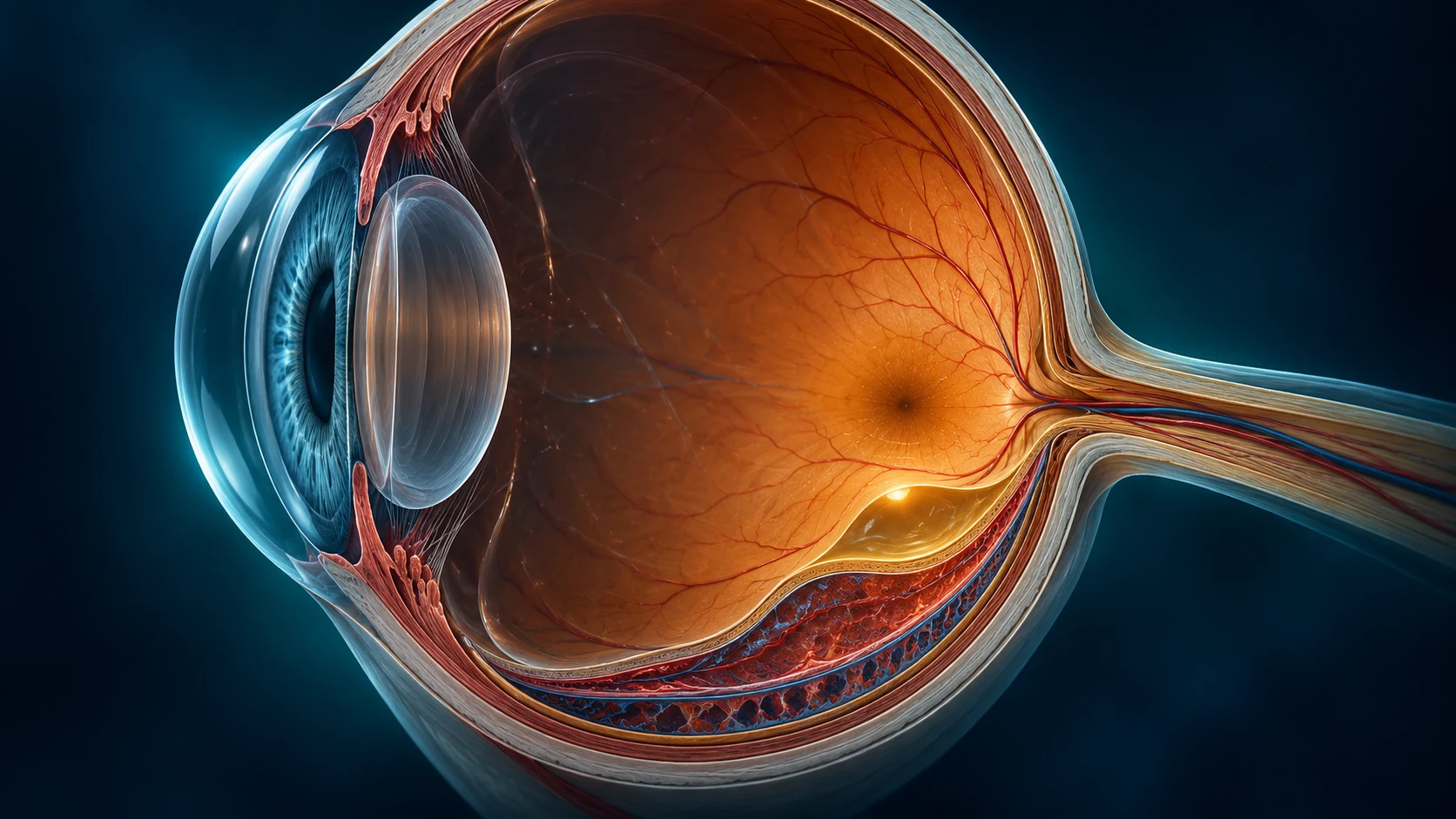
اعتلال الشبكية المصلي المركزي حالة يتجمع فيها سائل تحت جزء من الشبكية قرب مركز الإبصار، فيسبب زغللة أو خطوطًا معوجة أو إحساسًا بأن الأشياء أصغر في عين واحدة. لا يمكن تأكيده من الأعراض وحدها، وغالبًا يحتاج فحص قاع العين وتصوير OCT.
إيه اللي ممكن تلاحظه؟
قد تصبح القراءة أو ملاحظة التفاصيل أصعب في عين واحدة، أو تبدو الخطوط المستقيمة متموجة. قد يختلف وضوح الألوان أو حجم الأشياء قليلًا. لو ظهر ستار أسود أو ومضات كثيرة أو فقدان شديد ومفاجئ للنظر، فهذه ليست علامة ننتظر معها موعدًا عاديًا.
ما علاقته بالتوتر أو أدوية الكورتيزون؟
توجد عوامل قد ترتبط بالحالة، منها استعمال الكورتيزون بأشكاله المختلفة وبعض الضغوط الجسدية أو النفسية، لكن وجود العامل لا يثبت السبب عند شخص بعينه. أخبر الطبيب بكل الأدوية، ولا توقف بخاخًا أو كريمًا أو علاجًا موصوفًا فجأة من نفسك.
كيف يظهر في فحص العين؟
يقيس الطبيب النظر ويفحص الشبكية، ويستخدم تصوير OCT لرؤية طبقاتها والسائل تحتها. أحيانًا يحتاج صورًا إضافية ليحدد هل يوجد سبب آخر يشبه الحالة. صورة OCT تساعد في القرار لكنها تُفسَّر مع الأعراض والفحص، وليست تشخيصًا ذاتيًا.
هل تختفي وحدها؟ ومتى يعالجها الطبيب؟
بعض الحالات الحديثة يتحسن فيها السائل من دون إجراء، لذلك قد يختار الطبيب المتابعة وإعادة التصوير. إذا طال وجود السائل أو تكرر أو تأثر النظر، يناقش خيارات مثل العلاج الضوئي الديناميكي أو غيره حسب نتائج الفحص وتوافره. ليست كل الحالات مناسبة لحقن العين.
ما الذي أفعله الآن؟
احجز فحصًا إذا ظهر تشوش مركزي جديد، واكتب متى بدأ وهل يصيب عينًا واحدة. إذا كنت تستخدم كورتيزونًا، اذكر نوعه وجرعته، لكن لا تعدل العلاج وحدك. التزم بموعد إعادة التصوير حتى لو تحسن النظر قبل الموعد.
أسئلة شائعة
هل اعتلال الشبكية المصلي هو نفسه التنكس البقعي؟
لا. الحالتان قد تؤثران في مركز الإبصار، لكن أسباب التغير تحت الشبكية ومسار الفحص والعلاج مختلف.
هل أوقف الكورتيزون إذا قرأت أنه مرتبط بالحالة؟
لا توقفه أو تقلل جرعته فجأة من نفسك. تواصل مع الطبيب الذي وصفه ليقرر بديلًا أو تعديلًا آمنًا عند الحاجة.
هل يحتاج كل مريض إلى ليزر أو حقن؟
لا. قرار العلاج يعتمد على مدة وجود السائل، تكراره، صور الشبكية وتأثيره في النظر.
هل يكفي اختبار النظر في المنزل؟
لا. تغيّر القراءة أو شكل الخطوط يفيد في ملاحظة المشكلة، لكن التشخيص يحتاج فحصًا وتصويرًا مناسبًا.
المقال للتوعية ولا يغني عن فحص طبيب العيون. تغيّر النظر المفاجئ، الألم الشديد، إصابة العين أو ظهور علامة طارئة يحتاج إلى تقييم عاجل.
English version
Central Serous Chorioretinopathy: Why Central Vision Looks Blurry or Wavy
Quick answer
Central serous chorioretinopathy (CSC) is a condition in which fluid collects beneath the retina near the center of vision. It may cause blur, wavy lines or objects seeming smaller in one eye. Symptoms alone cannot confirm it; a dilated examination and OCT are often used.
What might you notice?
Reading or seeing detail may become harder in one eye, or straight lines may look wavy. Colors or object size can seem slightly different. A dark curtain, many new flashes or major sudden vision loss is not a routine symptom and needs urgent assessment.
How do stress and steroid medicines relate?
Several factors may be associated with CSC, including corticosteroid medicines in different forms and some physical or emotional stressors. An association does not prove the cause in an individual. Tell your clinician about every medicine, and never abruptly stop a prescribed steroid without advice.
How is it found?
The ophthalmologist checks vision and the retina, often using OCT to view its layers and any fluid beneath them. Additional imaging may be needed to rule out conditions that look similar. An OCT image supports the diagnosis but must be interpreted with symptoms and examination.
Can it settle on its own, and when is treatment considered?
In some recent episodes, fluid resolves without a procedure, so the ophthalmologist may monitor and repeat imaging. If fluid persists, returns or affects vision, treatments such as photodynamic therapy may be discussed based on findings and availability. Injections are not right for every case.
What should I do now?
Arrange an examination for new central blur and note when it began and whether one eye is affected. If you use a steroid, tell the clinician its form and dose, but do not change it yourself. Keep follow-up imaging even if vision seems better.
Frequently asked questions
Is CSC the same as macular degeneration?
No. Both can affect central vision, but the underlying changes beneath the retina and their evaluation and treatment differ.
Should I stop a steroid if I read that it is linked to CSC?
Do not stop or reduce it suddenly on your own. Contact the prescriber to discuss a safe change if needed.
Does everyone need laser or injections?
No. Treatment depends on how long fluid has been present, whether it recurs, the retinal images and its effect on vision.
Can a home vision test confirm it?
No. Changes in reading or line shape can alert you, but diagnosis requires an eye examination and appropriate imaging.
This article is for education and does not replace an eye examination. Sudden vision change, severe pain, an eye injury or another emergency sign needs urgent assessment.
المراجع الطبية | Medical references
- Feenstra HMA, et al. Central serous chorioretinopathy: An evidence-based treatment guideline. Progress in Retinal and Eye Research. 2024;101:101236. DOI 10.1016/j.preteyeres.2024.101236.
- American Academy of Ophthalmology. Therapies for Central Serous Chorioretinopathy. Ophthalmology. 2025.
- Asia-Pacific Vitreo-retina Society. Consensus Guidelines on Central Serous Chorioretinopathy. 2025. PMID 41106484.