
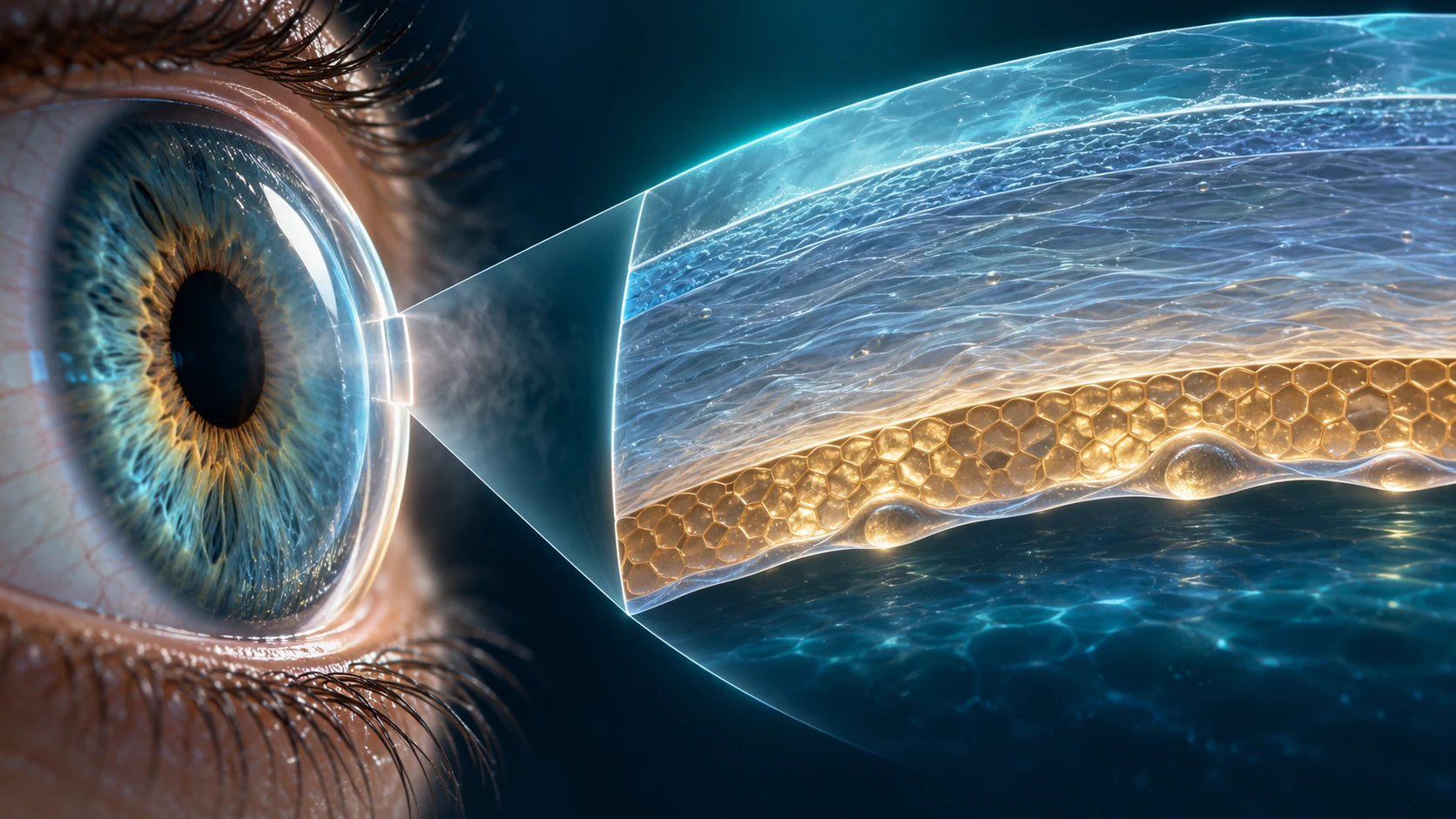
مرض فوكس يؤثر في خلايا الطبقة الداخلية من القرنية التي تساعد على إبقائها صافية. قد يبدأ بتشوش صباحي يتحسن تدريجيًا، أو وهج وصعوبة في الرؤية. بعض الناس يحتاجون متابعة فقط، بينما تُناقش جراحة القرنية إذا أصبحت العتامة أو التورم مؤثرين في النظر والحياة اليومية.
إيه اللي بيحصل في القرنية؟
القرنية نافذة شفافة في مقدمة العين، وعلى سطحها الداخلي طبقة رقيقة من الخلايا تساعد على تنظيم الماء. في مرض فوكس تقل كفاءة هذه الخلايا مع الوقت، وقد تتجمع قطرات دقيقة أو يبدأ تورم يغيّر صفاء القرنية. تطور الحالة يختلف من شخص لآخر.
علامات قد تلاحظها
قد يكون النظر مشوشًا عند الاستيقاظ ثم يتحسن مع مرور اليوم، أو تلاحظ وهجًا حول الأضواء وصعوبة في القيادة ليلًا. في المراحل الأكثر تقدمًا قد يستمر التشوش أو يصبح سطح العين حساسًا ومؤلمًا. هذه العلامات لها أسباب أخرى، لذلك لا تكفي وحدها للتشخيص.
كيف يفحص الطبيب القرنية؟
يفحص طبيب العيون القرنية بالمصباح الطبي ويبحث عن تغيرات الطبقة الداخلية والتورم. قد يقيس سُمك القرنية أو يصورها بجهاز يوضح شكلها وطبقاتها، ويقارن النتيجة بالنظر والأعراض. وجود تغيرات بسيطة لا يعني تلقائيًا أنك تحتاج إلى عملية.
المتابعة والعلاج
إذا كانت الأعراض بسيطة، قد يوصي الطبيب بمتابعة النظر والقرنية، وأحيانًا بقطرات أو مرهم ملحي لتخفيف الضباب مؤقتًا. لا يوجد دواء مثبت يزيل المرض نفسه. إذا أثرت القرنية في النظر بشكل واضح، قد يناقش الطبيب زراعة طبقة داخلية رقيقة من القرنية، وأحيانًا ينسقها مع جراحة المياه البيضاء.
لماذا مهم إخبار الجرّاح قبل عملية المياه البيضاء؟
مرض فوكس قد يؤثر في اختيار توقيت وطريقة جراحة المياه البيضاء والعدسة، لأن صفاء القرنية جزء مهم من وضوح النظر بعد العملية. أخبر طبيبك إذا سبق تشخيصك أو لديك ضباب صباحي متكرر، حتى يضع كل العوامل في الخطة.
أسئلة شائعة
هل ضباب الصباح يعني مرض فوكس؟
ليس بالضرورة. جفاف العين والمياه البيضاء وأسباب أخرى قد تسبب تشوشًا صباحيًا، والفحص يحدد السبب.
هل مرض فوكس يسبب العمى؟
لا يعني التشخيص وحده فقدان البصر. توجد متابعة وعلاجات جراحية عند الحاجة، ويحدد الطبيب الخطة حسب حالة القرنية.
هل أحتاج زراعة قرنية فورًا؟
لا. معظم القرارات تعتمد على تأثير المرض في النظر والأعراض، ولا يحتاج كل مريض إلى جراحة.
هل يؤثر في عملية المياه البيضاء؟
قد يؤثر في التوقيت والخطة الجراحية، لذلك أخبر جرّاح المياه البيضاء قبل اتخاذ القرار.
المقال للتوعية ولا يغني عن فحص طبيب العيون. تغيّر النظر المفاجئ، الألم الشديد، إصابة العين أو ظهور علامة طارئة يحتاج إلى تقييم عاجل.
English version
Fuchs Corneal Dystrophy: Morning Haze and Treatment Options
Quick answer
Fuchs dystrophy affects cells in the inner corneal layer that help keep the cornea clear. Early symptoms may include morning blur that gradually clears, glare or difficulty seeing. Some people only need monitoring, while corneal surgery may be discussed if swelling or cloudiness affects daily vision.
What happens in the cornea?
The cornea is the clear window at the front of the eye. A thin inner layer of cells helps regulate its water content. In Fuchs dystrophy, these cells become less effective over time, and small deposits or swelling can reduce clarity. Progression varies from person to person.
Symptoms you may notice
Vision may be hazy on waking and improve later, or lights may glare and night driving may become difficult. More advanced swelling can cause persistent blur or a sensitive, painful surface. Other conditions can cause similar symptoms, so they do not confirm Fuchs alone.
How is it checked?
The ophthalmologist examines the cornea with a slit lamp and looks for changes in the inner layer and swelling. Corneal thickness measurements or imaging may show its shape and layers, and are considered alongside vision and symptoms. Mild changes do not automatically mean surgery is needed.
Monitoring and treatment
For mild symptoms, the clinician may monitor vision and the cornea and sometimes suggest hypertonic saline drops or ointment for temporary haze relief. No medicine is proven to remove the disease itself. If corneal changes significantly affect vision, an inner-layer corneal transplant may be discussed, sometimes with cataract surgery.
Why tell your surgeon before cataract surgery?
Fuchs dystrophy can affect the timing and planning of cataract surgery because corneal clarity contributes to vision afterward. Tell your surgeon if you have been diagnosed or often experience morning haze, so all relevant factors are considered.
Frequently asked questions
Does morning haze mean Fuchs dystrophy?
Not necessarily. Dry eye, cataract and other conditions can cause morning blur, so examination is needed.
Does Fuchs dystrophy cause blindness?
The diagnosis alone does not mean sight will be lost. Monitoring and surgery are available when needed.
Do I need a corneal transplant right away?
No. Decisions depend on the effect on vision and symptoms, and many people do not need surgery.
Can it affect cataract surgery?
It may affect timing and surgical planning, so tell the cataract surgeon before deciding.
This article is for education and does not replace an eye examination. Sudden vision change, severe pain, an eye injury or another emergency sign needs urgent assessment.