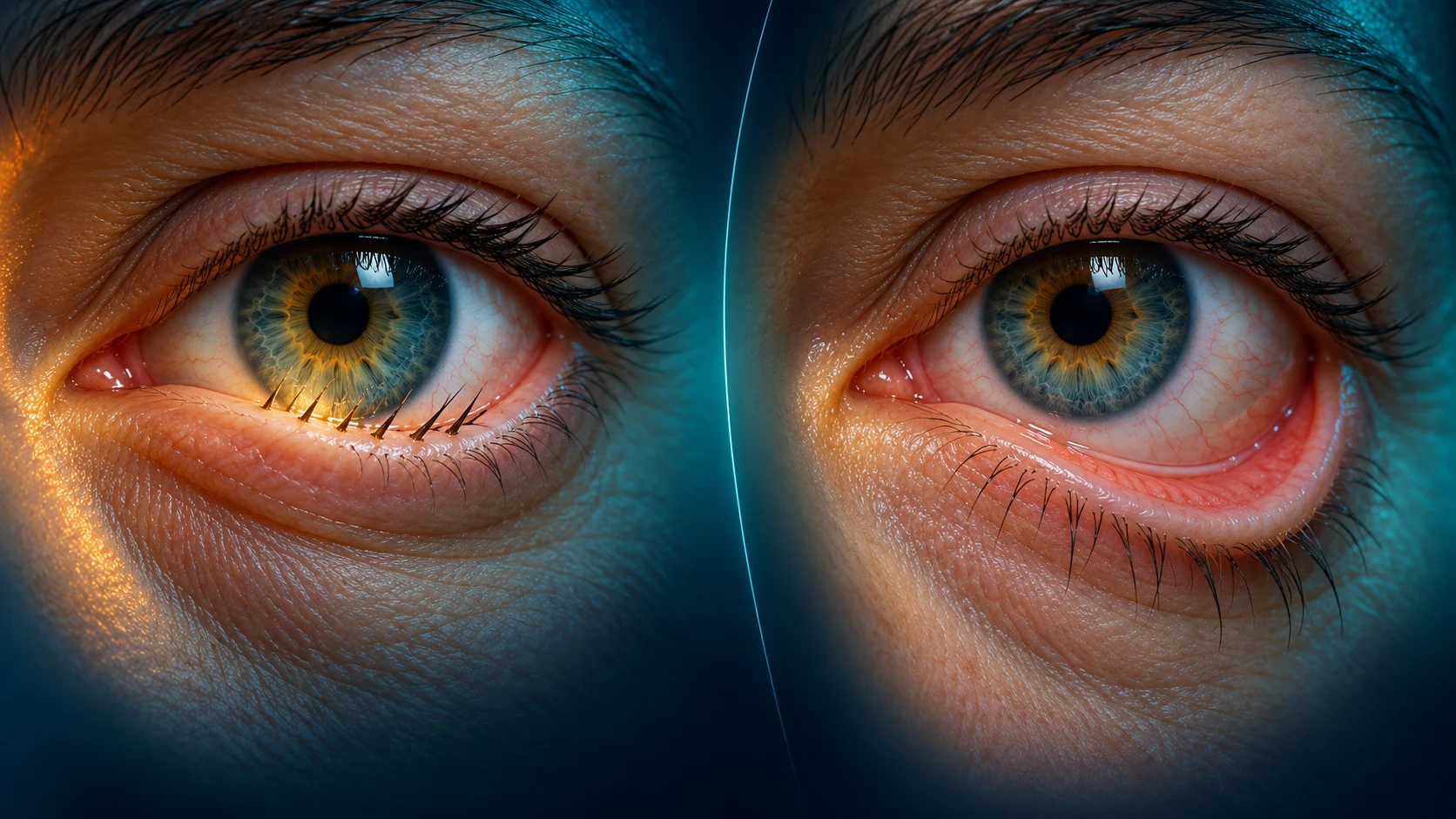
انقلاب الجفن للداخل يجعل الرموش تحتك بسطح العين، أما انقلاب الجفن للخارج فيُبعد حافته عن العين ويتركها مكشوفة أو دامعة. الحالتان قد تسببان تهيجًا وجفافًا أو دمعًا، ويحدد طبيب العيون العلاج حسب السبب وتأثر القرنية.
إيه الفرق بين الحالتين؟
في الانقلاب للداخل تتجه حافة الجفن والرموش ناحية العين، وغالبًا يسبب ذلك إحساسًا بالخدش أو جسم غريب. في الانقلاب للخارج تهبط الحافة بعيدًا عن العين، وقد لا تلامس فتحة الدموع موضعها الطبيعي. لا يمكن التفريق دائمًا بمجرد النظر في المرآة.
أعراض ممكن تظهر
قد تلاحظ احمرارًا أو دمعًا مستمرًا أو حساسية للضوء أو حكة وحرقة. احتكاك الرموش قد يجرح سطح القرنية، بينما انكشاف العين قد يزيد الجفاف. الألم الشديد أو نقص النظر أو حساسية الضوء الواضحة يستدعي كشفًا سريعًا.
ما الأسباب؟
ارتخاء أنسجة الجفن مع العمر سبب شائع، لكن الالتهاب أو الندبات أو إصابة سابقة أو جراحة قد تغير اتجاهه أيضًا. أحيانًا تكون المشكلة مؤقتة أو مرتبطة بحالة أخرى. فحص الجفن والقرنية يساعد على تحديد السبب وما إذا كان التغير ثابتًا.
العلاج المؤقت والعلاج النهائي
قد يصف الطبيب ترطيبًا أو حماية لسطح العين لتخفيف الأعراض، لكن ذلك لا يصحح انقلابًا مستمرًا. إذا كان الجفن يحك القرنية أو يسبب تعرضًا وجفافًا متكررًا، قد يناقش الطبيب جراحة لإعادة الحافة إلى مكانها. نوع الإجراء يختلف بين الداخل والخارج.
متى لا تنتظر؟
احجز كشفًا سريعًا إذا كانت الرموش تجرح العين، أو ظهر ألم مع زغللة أو حساسية شديدة للضوء. التورم والاحمرار المفاجئ أو إفرازات كثيفة قد تشير إلى مشكلة إضافية. لا تحاول لصق الجفن أو نتف الرموش كحل مستمر من دون نصيحة طبية.
أسئلة شائعة
هل انقلاب الجفن يسبب ضعف النظر؟
قد يهيّج سطح القرنية أو يجففها، وهذا قد يؤثر في وضوح النظر. الفحص يحدد مدى التأثر.
هل أستطيع إزالة الرموش التي تحتك بالعين؟
إزالة رمش قد تخفف الإحساس مؤقتًا لكنه قد ينمو مجددًا. لا تجعل ذلك بديلًا عن فحص سبب الاحتكاك.
هل كل الحالات تحتاج جراحة؟
لا. القرار يعتمد على اتجاه الجفن وشدة الأعراض وحالة سطح العين.
هل الدموع المستمرة تعني أن الجفن للخارج؟
ليس بالضرورة. الدمع له أسباب متعددة، والطبيب يفحص وضع الجفن ومجرى الدموع وسطح العين.
المقال للتوعية ولا يغني عن فحص طبيب العيون. تغيّر النظر المفاجئ، الألم الشديد، إصابة العين أو ظهور علامة طارئة يحتاج إلى تقييم عاجل.
English version
Eyelid Turning In or Out: Entropion and Ectropion Explained
Quick answer
Entropion turns the eyelid inward so lashes rub the eye. Ectropion turns the lid outward, leaving the eye exposed or watery. Both can cause irritation, dryness or tearing, and the ophthalmologist chooses treatment based on the cause and corneal health.
How are they different?
With entropion, the eyelid edge and lashes turn toward the eye, often causing a scratching or foreign-body feeling. With ectropion, the lid edge sags away and the tear opening may no longer sit in its normal position. A mirror cannot always distinguish the problem.
Symptoms that may appear
Possible symptoms include redness, persistent tearing, light sensitivity, itching or burning. Rubbing lashes can scratch the cornea, while exposure may worsen dryness. Significant pain, reduced vision or marked light sensitivity needs prompt assessment.
What can cause them?
Age-related loosening of eyelid tissues is common, but inflammation, scarring, prior injury or surgery can also change lid position. Sometimes the problem is temporary or linked to another condition. An examination of the eyelid and cornea helps identify the cause and whether it is stable.
Temporary care and definitive treatment
Lubrication or surface protection may ease symptoms but does not correct a persistent lid turn. If the lid rubs the cornea or repeatedly exposes and dries the eye, surgery to reposition the lid may be discussed. The procedure differs for inward and outward turning.
When should you not wait?
Seek prompt assessment if lashes scrape the eye or if pain comes with blur or severe light sensitivity. Sudden swelling, redness or thick discharge may signal another problem. Do not rely on taping the lid or plucking lashes as ongoing treatment without medical advice.
Frequently asked questions
Can a turned eyelid affect vision?
It may irritate or dry the cornea, which can blur vision. Examination shows how much the surface is affected.
Can I remove lashes that rub the eye?
Removing a lash may help briefly, but it can grow back. Do not use it instead of finding why lashes rub.
Does everyone need surgery?
No. The decision depends on lid position, symptoms and the health of the eye surface.
Do watery eyes mean the lid has turned out?
Not necessarily. Tearing has many causes, so the lid, tear duct and eye surface may all need checking.
This article is for education and does not replace an eye examination. Sudden vision change, severe pain, an eye injury or another emergency sign needs urgent assessment.