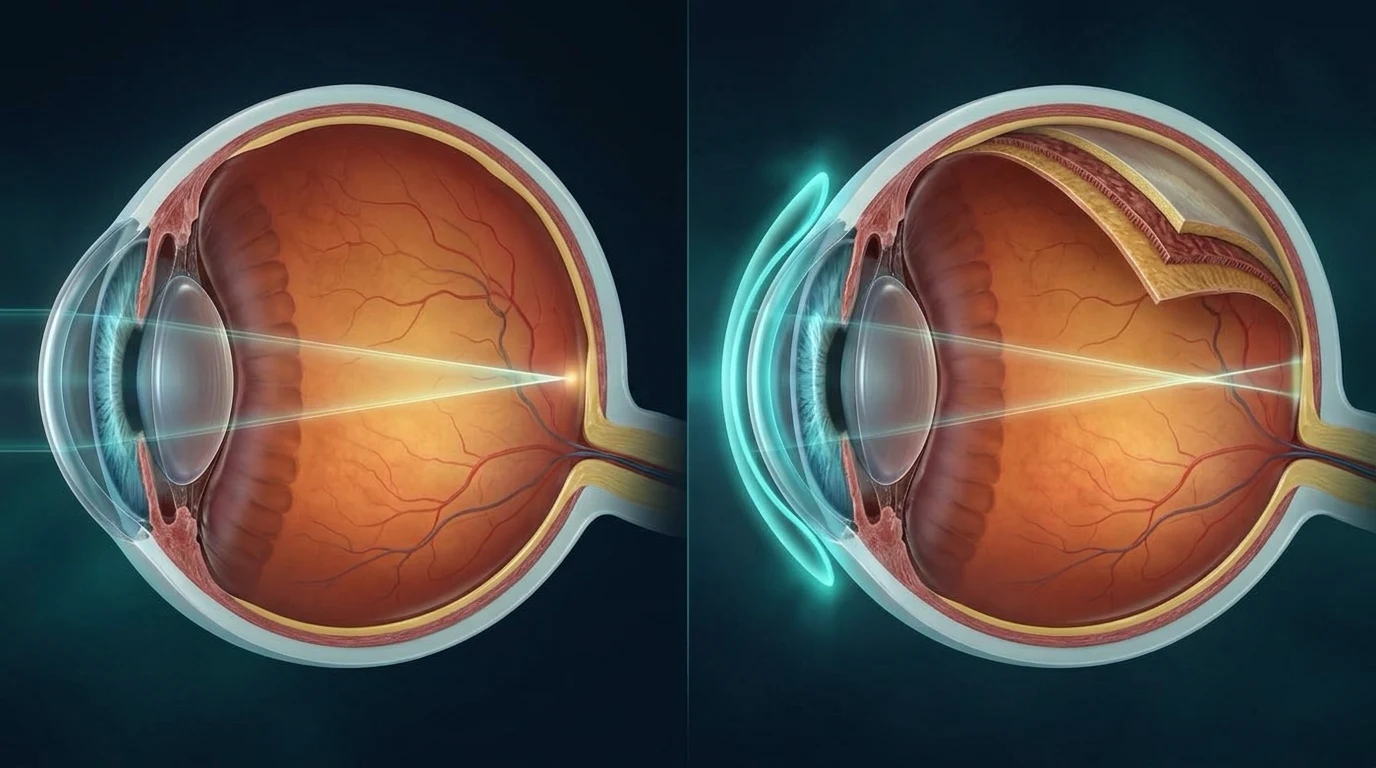
قصر النظر عند الأطفال قد يزيد مع نمو العين، وليس لأن الطفل يحتاج نظارة أقوى فقط. البداية الصح هي كشف دقيق ومتابعة درجة النظر أو طول العين، مع وقت كافٍ خارج البيت في ضوء النهار وعادات مناسبة للقراءة والشاشات. بعد ذلك يناقش الطبيب خيارات إبطاء الزيادة، مثل قطرات الأتروبين بتركيز منخفض، أو النظارات والعدسات متعددة البؤر، أو عدسات أورثوكيراتولوجي ليلية (Ortho-K) إذا كانت مناسبة للطفل.
لماذا نهتم بزيادة قصر النظر؟
قصر النظر يجعل الأشياء البعيدة غير واضحة، لكن الدرجات العالية ترتبط لاحقًا بزيادة مخاطر مشاكل الشبكية والمياه الزرقاء وبعض أمراض العين. الهدف من خطة التحكم ليس إلغاء قصر النظر فورًا، بل تقليل سرعة زيادته خلال سنوات النمو.
تاريخ العائلة، بدء قصر النظر في سن صغيرة، قلة الوقت خارج المنزل، وزيادة العمل القريب قد ترتبط بالتقدم، لكن السبب عادة متعدد العوامل.
ماذا نتابع في الزيارة؟
يحتاج الطفل لقياس نظر مناسب لعمره وفحص شامل للعين، وأحيانًا قياس الطول المحوري للعين بجهاز ضوئي. مقارنة القياسات مع الوقت أهم من قراءة واحدة، لأن الخطة تتغير حسب سرعة الزيادة.
لو بدأ الطفل يقرب الكتاب، يضيق عينيه، أو لا يرى السبورة، لا تنتظر أن يشتكي. الأطفال قد يتأقلمون مع الرؤية الضبابية ولا يصفونها بوضوح.
العادات اليومية التي لها معنى
زيادة الوقت في ضوء النهار والخروج للهواء الطلق عادة بسيطة ومفيدة، مع فواصل أثناء القراءة والشاشات ومسافة عمل مريحة. هذه الخطوات لا تستبدل العلاج إذا كان قصر النظر يتقدم، لكنها جزء من خطة متكاملة.
لا يوجد رقم سحري لعدد ساعات الشاشة يضمن ثبات النظر. المهم هو التوازن بين النوم، النشاط الخارجي، العمل القريب والوقت على الأجهزة.
خيارات إبطاء قصر النظر
الأتروبين بتركيزات منخفضة قد يصفه طبيب العيون لبعض الأطفال. التركيز والجدول ليسا موحدين لكل الحالات، وقد تظهر حساسية للضوء أو صعوبة مؤقتة في القراءة، لذلك لا تستخدم قطرات شخص آخر.
العدسات اللاصقة متعددة البؤر أو النظارات المصممة لإبطاء زيادة قصر النظر قد تناسب بعض الأطفال القادرين على الالتزام بالتعليمات. عدسات أورثوكيراتولوجي الليلية (Ortho-K) تعيد تشكيل سطح القرنية بشكل مؤقت أثناء النوم، وتحتاج نظافة دقيقة ومتابعة لأن أي عدسة لاصقة قد تسبب عدوى إذا استُخدمت بشكل خاطئ.
الدراسات الحديثة تقارن بين هذه الخيارات وتؤكد أن الاستجابة تختلف من طفل لآخر. الأفضل هو اختيار خطة تناسب الطفل ويمكن الالتزام بها مع قياسات منتظمة، وليس اختيار طريقة بناءً على إعلان.
كيف نتابع الخطة؟
عادة تُعاد الزيارة كل عدة أشهر في بداية الخطة، ثم حسب ثبات القياسات. خذ معك درجات النظارة السابقة، واسأل عن الهدف من العلاج، مدة التجربة، الأعراض الجانبية، ومتى نعيد القياس.
إذا فشلت الخطة في تقليل الزيادة، يمكن تعديلها. لا تغيّر القطرات أو نوع العدسات بدون الطبيب، ولا توقف العلاج بمجرد تحسن قراءة واحدة.
أسئلة شائعة
هل النظارة بتزوّد قصر النظر؟
لا. النظارة المصححة لا تجعل العين تطول، لكنها لا تمنع التقدم وحدها عند بعض الأطفال.
هل الأتروبين آمن لكل طفل؟
يُستخدم بوصفة ومتابعة من طبيب العيون وبتركيز مناسب. قد لا يناسب كل الأطفال، والطبيب هو من يحدد الجرعة ومواعيد المتابعة لكل طفل.
هل توقف عدسات Ortho-K قصر النظر نهائيًا؟
لا، لا توقفه نهائيًا، لكنها قد تبطئ زيادة طول العين عند بعض الأطفال. النظافة والمتابعة مهمتان لتقليل خطر العدوى.
هل اللعب خارج المنزل يغني عن العلاج؟
الخروج مفيد وقد يقلل خطر بدء قصر النظر، لكنه لا يغني عن خطة علاج ومتابعة إذا كانت الدرجة تتزايد.
تنبيه مهم: هذا المحتوى للتوعية ولا يغني عن الكشف عند طبيب العيون. إذا حدث فقدان مفاجئ في النظر، أو ألم شديد، أو ومضات جديدة، احجز فحصًا عاجلًا.
English version
Myopia Control in Children: How Can We Slow Eye Growth?
Why does progression matter?
Myopia makes distant objects blurred, while high myopia is associated with higher lifetime risks of retinal disease, glaucoma and other eye problems. Myopia control aims to slow eye growth during childhood rather than eliminate the prescription immediately.
Family history, younger age at onset, limited outdoor time and heavy near work may contribute, but progression is usually multifactorial.
What should be measured?
The visit should include age-appropriate refraction, an eye-health examination and, when useful, axial-length measurement. Comparing measurements over time is more informative than a single reading because treatment depends on the rate of change.
A child who moves closer to books, squints or struggles to see the board may not describe blur clearly. Screening should not wait for a complaint.
Daily habits that help
More daylight and outdoor activity, regular breaks during near work and a comfortable reading distance are sensible parts of a prevention plan. They do not replace treatment when myopia is progressing, but they support a comprehensive approach.
There is no single screen-time number that guarantees stable vision. Balance sleep, outdoor activity, near work and device use.
Evidence-based myopia-control options
A clinician may prescribe low-dose atropine for selected children. Concentration and schedule are not universal, and light sensitivity or temporary near blur can occur. Never use another child's drops.
Multifocal contact lenses or specially designed spectacle lenses may suit children who can follow the safety routine. Orthokeratology temporarily reshapes the cornea overnight and requires meticulous lens hygiene and follow-up because any contact lens can be associated with infection when misused.
A 2025 randomized trial compared orthokeratology with different atropine concentrations, and recent reviews emphasize that response varies between children. A sustainable plan with repeat measurements is more important than choosing a treatment by marketing language.
How is the plan monitored?
Follow-up is often scheduled every few months at first and then adjusted to the child's measurements. Bring previous prescriptions and ask about the treatment goal, trial duration, possible effects and the next measurement date.
If progression continues, the plan can be changed. Do not alter drops or lens wear without the clinician, and do not stop solely because one measurement looks better.
Frequently asked questions
Do glasses make myopia worse?
No. Corrective glasses do not lengthen the eye, but glasses alone may not stop progression in every child.
Is atropine safe for every child?
It should be prescribed and monitored at an appropriate concentration. Individual suitability and follow-up are essential.
Does orthokeratology permanently stop myopia?
No. It may slow axial elongation in some children, but careful hygiene and monitoring are necessary.
Can outdoor time replace treatment?
Outdoor time may lower the risk of onset, but it does not replace treatment and monitoring when myopia is progressing.
Medical note: This content is for education and does not replace an ophthalmic examination. Sudden vision loss, severe pain or new flashes require urgent assessment.
المراجع الطبية | Medical references
- Orthokeratology, 0.04% atropine and 0.01% atropine for myopia control: randomized clinical trial. JAMA Ophthalmology. 2025. DOI 10.1001/jamaophthalmol.2025.2321. PMID 40705323.
- Adding 0.01% atropine with orthokeratology for myopia: updated meta-analysis. Frontiers in Pediatrics. 2025. DOI 10.3389/fped.2025.1571790. PMID 40530180.
- International Myopia Institute interventions report. 2025.
- American Academy of Ophthalmology. Myopia control in children.