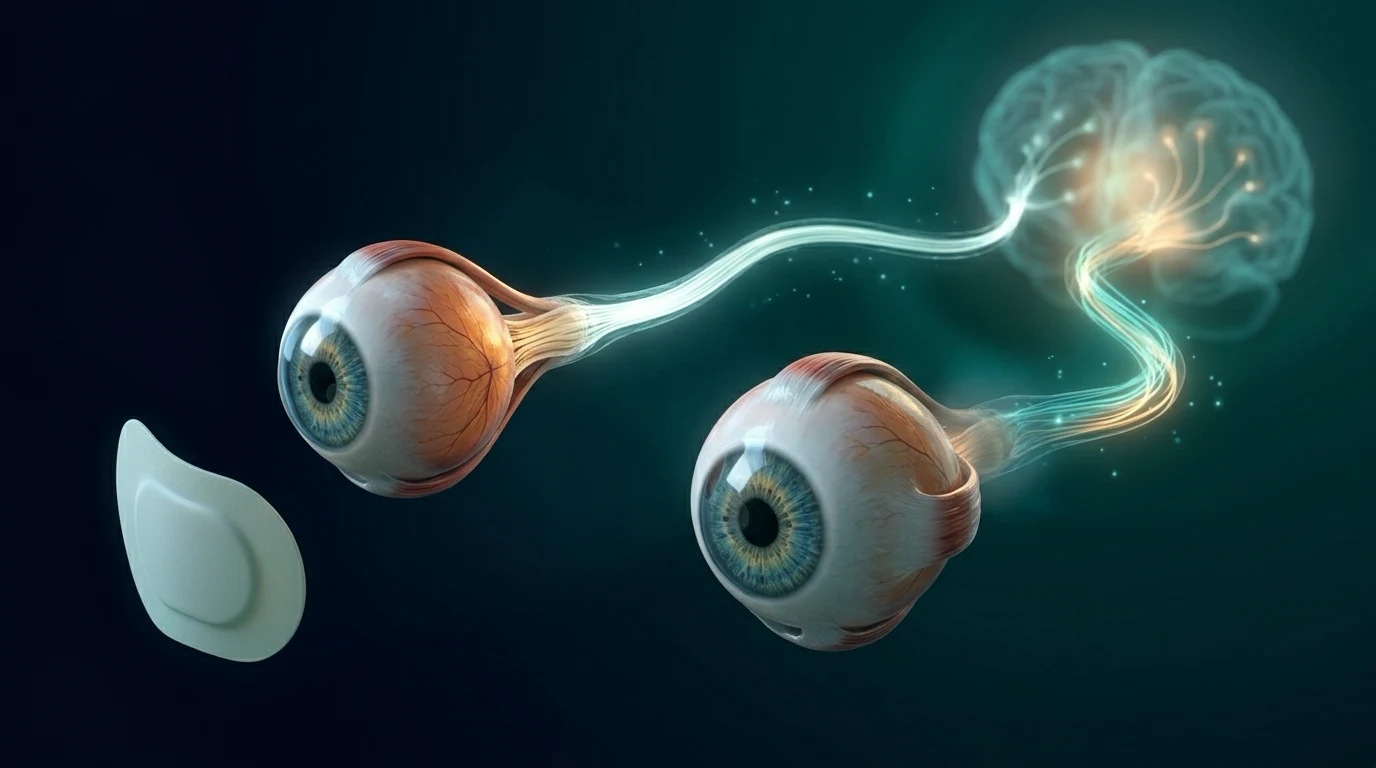
كسل العين، أو ما يسميه الأطباء الغمش (Amblyopia)، هو ضعف في تطور النظر في عين واحدة أو العينين خلال الطفولة، رغم أن شكل العين قد يبدو طبيعيًا. النظارة قد تكون أول خطوة، لكن بعض الأطفال يحتاجون تغطية العين ذات النظر الأقوى أو قطرات أتروبين أو تمارين بصرية. كلما بدأ العلاج مبكرًا كانت فرصة التحسن أفضل، مع علاج السبب والالتزام بالمتابعة.
لماذا تحدث العين الكسولة؟
المخ يحتاج صورة واضحة ومتقاربة من العينين حتى يتعلم الرؤية بشكل طبيعي. الحول قد يجعل المخ يتجاهل عينًا، وفرق في درجة النظر بين العينين قد يجعل صورة عين أضعف، كما أن المياه البيضاء أو عتامة القرنية أو تدلي الجفن قد تحجب الصورة في سن مهم لنمو النظر.
لذلك لا يكفي أن نقول للطفل «استخدم العين الأضعف» قبل التأكد من عدم وجود سبب في العين يحتاج علاجًا.
علامات قد يلاحظها الأهل
قد يميل الطفل برأسه، يغلق عينًا في الشمس، يقترب من التلفزيون أو يرفض القراءة. أحيانًا لا توجد شكوى لأن العين الأقوى تعوض الضعف.
الحول المتكرر، اختلاف اتجاه العينين، أو تدلي جفن يغطي البؤبؤ يستدعي فحصًا مبكرًا حتى لو كان الطفل يرى ويتحرك طبيعيًا.
كيف يعرف الطبيب السبب؟
يُقاس النظر لكل عين لوحدها، ويُفحص الحول وحركة العينين والبؤبؤ وقاع العين. قد يحتاج الطفل إلى قطرات توسّع حدقة العين لقياس درجة النظر بدقة، خصوصًا في السن الصغير.
لوحة النظر وحدها لا تفسر السبب. الهدف هو معرفة هل المشكلة في درجة النظر، أو بسبب الحول، أو بسبب عتامة أو مشكلة أخرى في العين، ثم اختيار العلاج المناسب.
متى تكفي النظارة؟
لو كان السبب فرقًا في درجة النظر بين العينين أو طول نظر غير مصحح، قد يتحسن النظر بالنظارة وحدها خلال أسابيع أو أشهر. المهم ارتداء النظارة بالطريقة التي يحددها الطبيب وتغييرها عند الحاجة.
إذا ظل الفرق بين العينين، قد يضيف الطبيب تغطية العين ذات النظر الأقوى لفترة يومية محددة، أو قطرات أتروبين لتقليل وضوح صورتها. لا تستخدم التغطية طوال اليوم أو لفترة عشوائية.
التغطية والقطرات والتمارين
التغطية تعطي المخ فرصة أكبر لاستخدام العين الأضعف، ونجاحها يعتمد على السبب والعمر والالتزام. قد يرفض الطفل الغطاء في البداية، وتساعد خطة قصيرة وواضحة ومكافأة بسيطة على الاستمرار.
برامج العرض ثنائي العينين (dichoptic) أو ألعاب التدريب البصري قد تكون إضافة في بعض المراكز، لكنها لا تغني عن النظارة أو علاج الحول أو إزالة عتامة تمنع وصول الصورة. اسأل الطبيب عن الفائدة المتوقعة في حالة طفلك.
هل العلاج ينفع بعد سن كبير؟
الطفولة هي الفترة الأسهل لتطوير الرؤية، لكن بعض الأطفال الأكبر سنًا والمراهقين قد يستفيدون من العلاج. لا تؤجل الفحص لأن الطفل تعدى سن الحضانة، فالقرار يعتمد على مقدار الضعف وسببه.
أسئلة شائعة
هل العين الكسولة معناها أن العين تالفة؟
ليس بالضرورة. غالبًا يكون ضعف التطور بسبب صورة غير واضحة أو عدم استخدام العينين معًا، لكن يجب فحص العين لاستبعاد سبب عضوي.
هل التغطية تضعف العين السليمة؟
عند استخدامها بالمدة التي يحددها الطبيب تكون آمنة غالبًا، لكن التغطية العشوائية قد تسبب مشكلة مؤقتة، لذلك المتابعة ضرورية.
هل النظارة تعالج العين الكسولة؟
قد تكون كافية إذا كان السبب انكساريًا، وقد تحتاج الخطة تغطية أو قطرات أو علاج الحول حسب الاستجابة.
متى يحتاج الطفل فحصًا عاجلًا؟
ظهور حول مفاجئ، أو تدلي جفن يغطي البؤبؤ، أو ألم أو احمرار شديد، أو ضعف سريع في النظر يحتاج كشفًا عاجلًا.
تنبيه مهم: هذا المحتوى للتوعية ولا يغني عن الكشف عند طبيب العيون. إذا حدث فقدان مفاجئ في النظر، أو ألم شديد، أو ومضات جديدة، احجز فحصًا عاجلًا.
English version
Amblyopia in Children: When Are Glasses Enough, and When Are Patching or Drops Needed?
Why does amblyopia happen?
The brain develops vision best when it receives clear, reasonably matched images from both eyes. Strabismus can lead the brain to suppress one eye, while a large prescription difference can make one image consistently weaker. Cataract, corneal opacity or a drooping eyelid can also block the image during a sensitive period.
That is why simply asking a child to use the weaker eye is not enough before an ocular cause is excluded.
Signs parents may notice
A child may tilt the head, close one eye in bright light, sit close to the television or avoid reading. Some children report nothing because the stronger eye compensates.
Frequent eye misalignment, a drooping lid that covers the pupil or a clear difference between the eyes warrants early assessment even when the child seems to function normally.
How is it diagnosed?
Vision is measured separately in each eye, with assessment of alignment, movements, pupils and the back of the eye. Dilating drops may be needed to measure the true prescription, especially in young children.
A chart result alone does not reveal the cause. The clinician must determine whether the problem is refractive, strabismic or structural before choosing treatment.
When are glasses enough?
If the cause is an uncorrected prescription or anisometropia, glasses alone may improve vision over weeks or months. Wearing them as prescribed and updating the prescription are important.
If a difference persists, part-time patching of the stronger eye or atropine to blur its image may be added. The schedule is individualized; all-day or unsupervised patching is not a safe default.
Patching, drops and visual therapy
Patching gives the brain more practice with the weaker eye. Benefit depends on cause, age and adherence. A clear routine and positive reinforcement can make part-time patching easier.
Dichoptic programs or structured visual activities may be additions in selected settings, but they do not replace glasses, strabismus care or removal of an opacity that blocks the image. Evidence is evolving and expectations should be realistic.
Does treatment help after early childhood?
Early childhood is the most responsive period, but older children and teenagers can still benefit in selected cases. Do not skip assessment because a child is past preschool age; cause and residual vision matter.
Frequently asked questions
Does amblyopia mean the eye is damaged?
Not necessarily. It often reflects abnormal visual development, but an examination is needed to exclude structural disease.
Can patching weaken the good eye?
When prescribed for the recommended duration it is usually safe, but unsupervised patching can cause temporary problems and needs follow-up.
Do glasses cure amblyopia?
They may be enough when the cause is refractive, but patching, atropine or strabismus treatment may be needed according to response.
When does a child need urgent assessment?
New eye misalignment, a lid covering the pupil, severe pain or redness, or rapid visual decline should be assessed urgently.
Medical note: This content is for education and does not replace an ophthalmic examination. Sudden vision loss, severe pain or new flashes require urgent assessment.
المراجع الطبية | Medical references
- American Academy of Ophthalmology Preferred Practice Pattern: Amblyopia. 2023.
- Instrument-based screening for amblyopia and amblyopia risk factors: AAO report. Ophthalmology. 2025. DOI 10.1016/j.ophtha.2025.07.007. PMID 40864029.
- Dichoptic treatment versus eye patching in pediatric amblyopia: systematic review and meta-analysis. Clinical Ophthalmology. 2025. DOI 10.2147/OPTH.S513329. PMID 40589537.
- Cochrane. Treatment of amblyopia: patching or drops.